




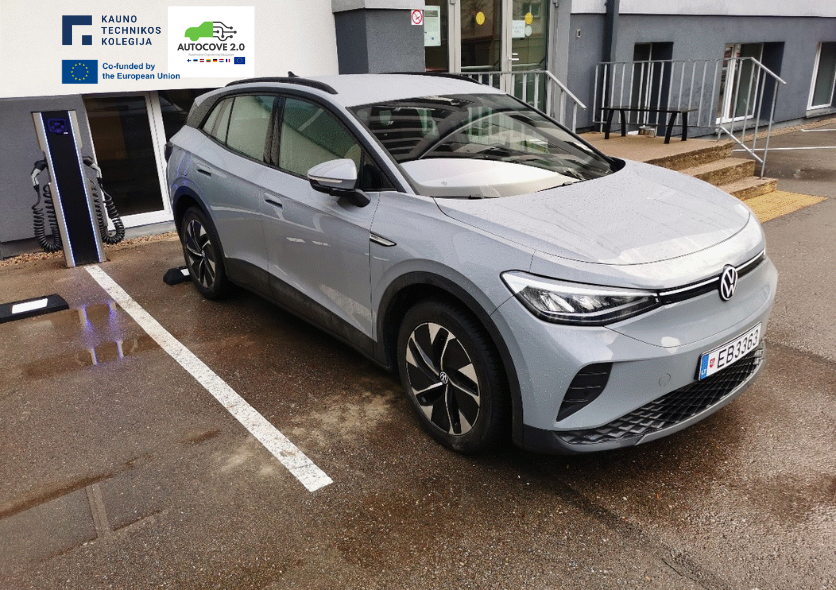
Kaunas University of Applied Engineering Sciences (KTK) has secured a grant of €50,750 to advance its research and development initiatives in the realm of electric vehicles. The funds are earmarked for the creation of a specialized study module focused on electric battery charging systems tailored for the demanding cold Nordic conditions. Additionally, KTK is set to develop a study module concentrating on the critical aspect of fire safety associated with high voltage batteries.
Originally conceived with the intention of acquiring a second-hand electric vehicle, the project underwent a notable shift as KTK administration and its social partners expressed heightened support and interest. Following a comprehensive technical analysis, the decision was made to opt for a brand-new Volkswagen ID4, representing a step forward in embracing cutting-edge electric vehicle technology.
Fossil fuel-powered transportation is being gradually phased out, with battery electric vehicles taking a bigger share of the new vehicle market each year. Lithium-ion batteries used in most battery electric vehicles are rechargeable, lightweight, and capable of higher energy density than most other available battery types. However, they suffer reduced charging efficiency, significant capacity loss, and accelerated aging in low temperatures. This has a negative effect on electric vehicles’ driving range.

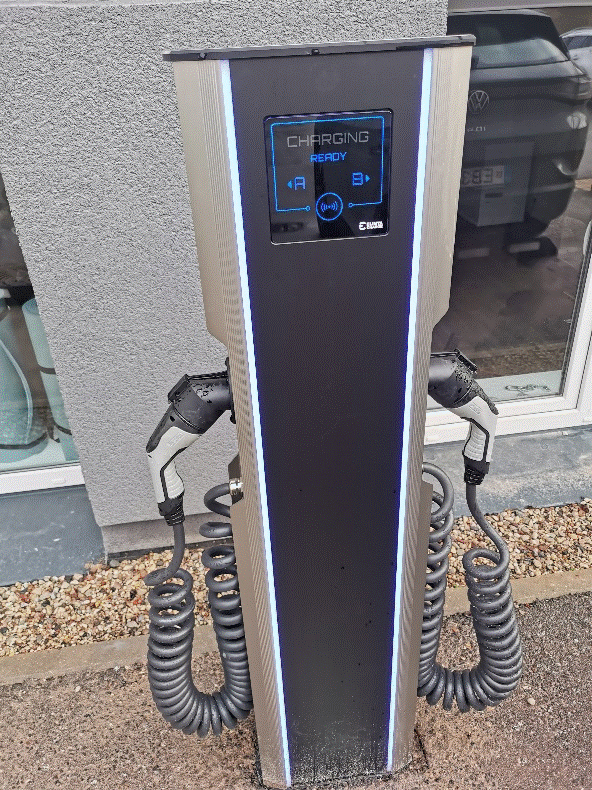

This specific vehicle was chosen because this car has an optional heat pump. It provides energy-efficient heating of the vehicle interior, resulting in less current being needed from the battery. Compared to a petrol-driven car, the drive components of an electric vehicle do not produce enough waste heat to adequately heat the vehicle interior. The solution: a highly efficient heat pump system compresses refrigerant under high pressure. The heat produced is used to heat up flowing cold air. This uses less energy from the battery for the high-voltage heater, beneficially delivering greater range over electric vehicles without heat pump. Therefore, the heat pump has a positive effect on energy resources and it makes the vehicle more suitable to drive in cold climate countries.
The purchased vehicle will be used by the researchers and students to analyse the capacity and performance of the electric vehicle in order to develop low-temperature battery solutions to maintain acceptable levels of range in cold climates. Lower temperatures tend to reduce battery capacity, which means that the possible range and performance for electric vehicles are worse in colder climates. Therefore, the research will be performed to measure the battery discharge capacity when lithium-ion batteries are exposed to different cold temperatures and predict the vehicle’s exploitation peculiarities.
Funded by the European Union. Views and opinions expressed are however those of the author(s) only and do not necessarily reflect those of the European Union or EACEA. Neither the European Union nor the granting authority can be held responsible for them.
Prepared by:
Auto Cove 2.0
Kaunas University of Applied Engineering Sciences