




From May 6 to 8, Kaunas became a hub of international collaboration and technical excellence as it hosted the third Collaborative Development Workshop under the Auto-CoVE 2.0 project, part of the Erasmus+ Centres of Vocational Excellence (CoVE) initiative. The event brought together leading educational institutions, research centers, and automotive industry partners from across Europe to advance clean-tech vehicle education and training.
Held at the Kaunas Educational Center of Technologies (Kautech), the workshop gathered experts and educators for an intensive three-day program of hands-on sessions, technical discussions, and collaborative planning. Key topics included EV and hybrid safety, battery diagnostics and repair, ADAS systems, and hydrogen-based technologies—highlighting the project’s focus on greening Europe through clean vehicle innovation.


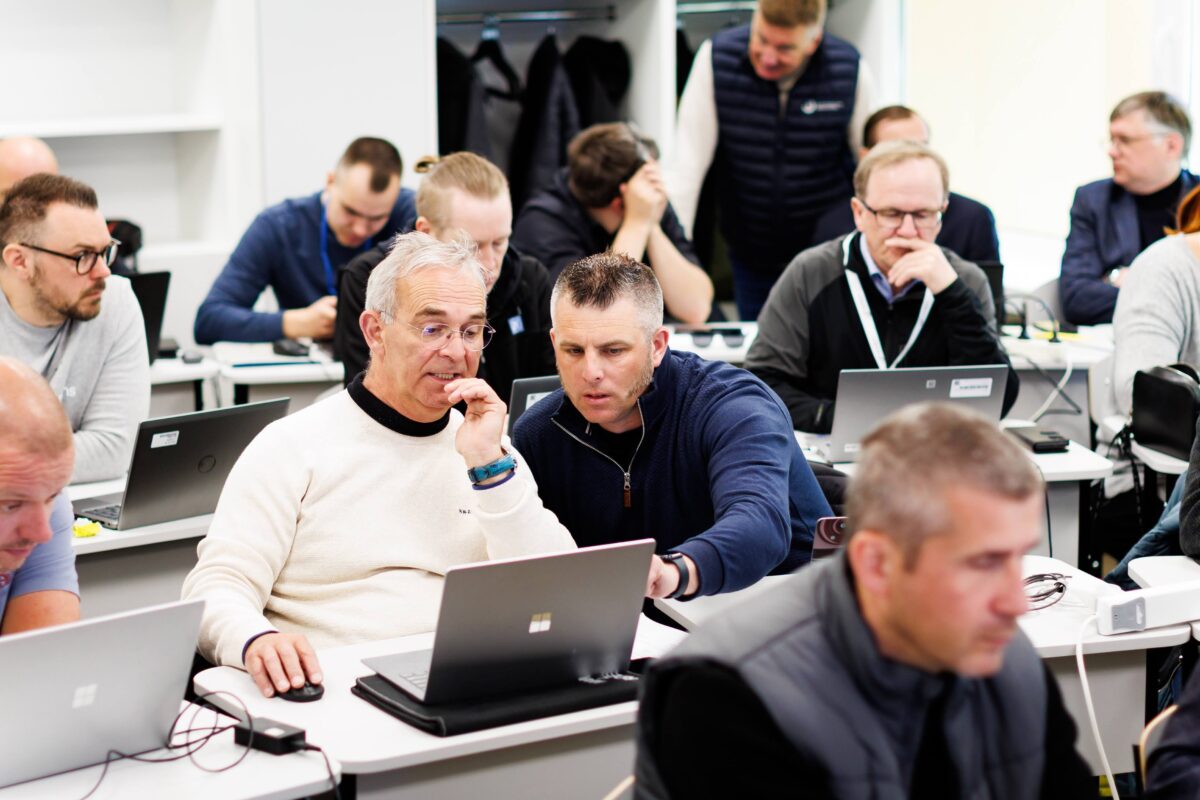


The agenda featured in-depth workshops such as battery assembly and chemistry, electric vehicle battery dismantling, fire safety for high-voltage systems, and diagnostics of EV battery systems. Thought leaders from institutions like Electude, VTT, THWS, Volvo, and Kautech led sessions that encouraged cross-border knowledge exchange and curriculum development, culminating in a joint brainstorming session to develop a new training course template.
In addition to technical sessions, participants enjoyed cultural insights and sightseeing opportunities, including a visit to the monumental Christ’s Resurrection Basilica and a historic ride on the Žaliakalnis Funicular. These cultural moments provided a unique local perspective and strengthened international camaraderie.
Auto-CoVE 2.0 continues to push boundaries in vocational education, aligning with European goals for sustainable mobility and innovation. The workshop reaffirmed the importance of collaborative development and practical training in shaping the future workforce for the clean mobility sector.
Funded by the European Union. Views and opinions expressed are however those of the author(s) only and do not necessarily reflect those of the European Union or the European Education and Culture Executive Agency (EACEA). Neither the European Union nor EACEA can be held responsible for them.
Prepared by:
Auto Cove 2.0
Ventspils tehnikums
📸 Margus Ainsalu