



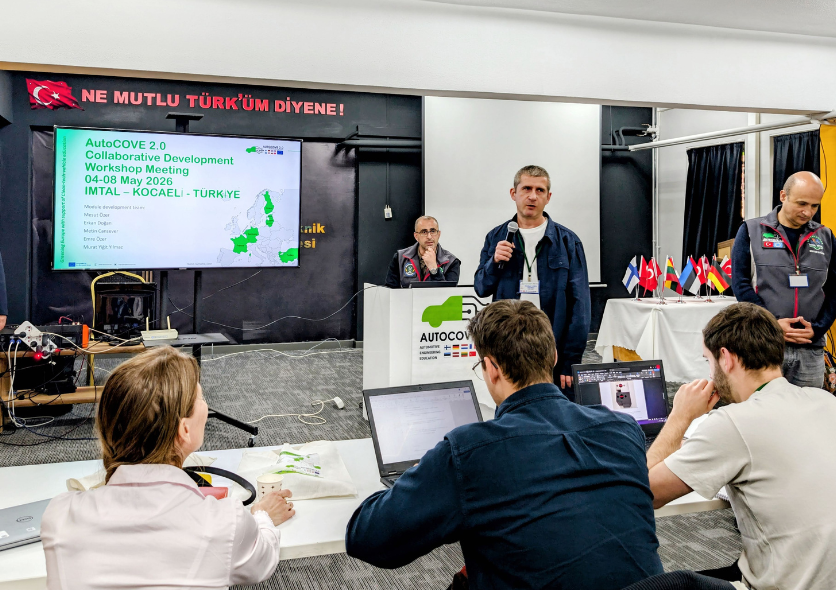
From 5–7 May 2026, partners of the Erasmus+ Centres of Vocational Excellence (CoVE) initiative AutoCOVE 2.0 gathered in İzmit, Türkiye, for the fifth Collaborative Development Workshop (CDW), hosted by İzmit Vocational and Technical Anatolian High School (İzmit MTAL). The event brought together vocational education providers, higher education institutions, industry representatives, and technology experts from across Europe to exchange experiences, evaluate piloting results, and further develop innovative educational content supporting the green transition of the automotive sector.
As Europe’s mobility sector continues to evolve towards electrification, hydrogen technologies, digitalisation, and advanced vehicle systems, the need for modern vocational education has never been greater. AutoCOVE 2.0 addresses this challenge by developing innovative study modules and training courses designed to equip both current and future professionals with the competencies required in the clean-tech vehicle industry. The Collaborative Development Workshop in Türkiye served as an important milestone for partners to review progress and share practical experiences from module testing and implementation across participating countries.
Sharing Experiences from Module Development and Piloting
The workshop opened with a project update by coordinator Elina Kollanus (Omnia, Finland), who presented the current status of AutoCOVE 2.0 and outlined upcoming project activities. Throughout the workshop, partners showcased the results of extensive development work carried out during the previous months.
Representatives from Tartu VOCO presented their experiences in testing newly developed hybrid vehicle modules, while Omnia introduced sales-related learning materials and shared feedback gathered during piloting activities. Electude provided an overview of teacher training course development and the ongoing translation process that will ensure wider accessibility of project outcomes across Europe. İzmit MTAL contributed by presenting the Charging Infrastructure module, highlighting both technical content and lessons learned during implementation.
An additional highlight of the workshop was a presentation delivered by Prof. Dr. Engin Özdemir from Kocaeli University, who introduced the concept of battery second-life applications. As electric vehicle adoption continues to increase across Europe, the management of batteries at the end of their automotive service life is becoming an increasingly important sustainability challenge.
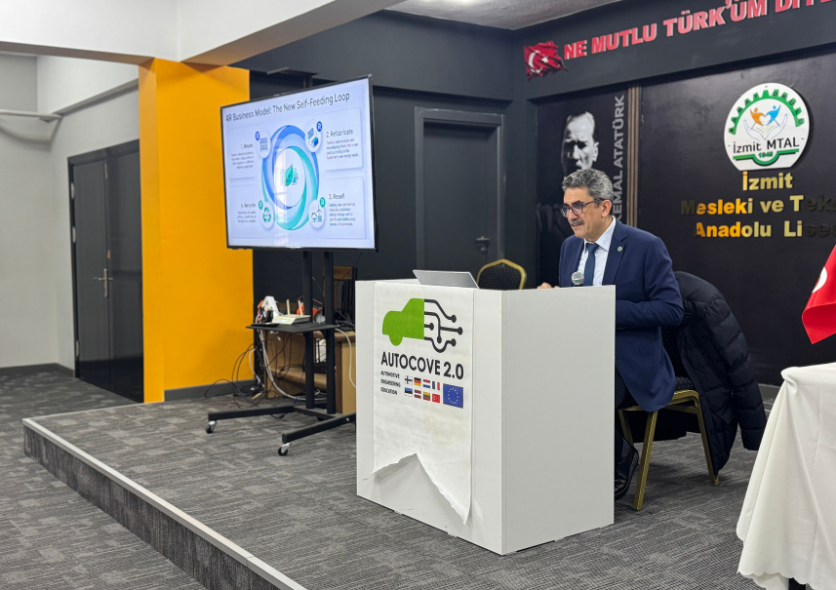
On the second day, the focus shifted towards several specialised clean-tech vehicle topics. Toon Bertens from Koning Willem I College (KW1C) introduced the project’s hydrogen modules and shared experiences from testing activities, demonstrating how hydrogen technologies are becoming an increasingly important component of future mobility education. Colleagues from THWS presented four study modules developed within the project, while Kautech introduced its battery dismantling and recycling module, addressing one of the key sustainability challenges facing the automotive sector today. Lithuanian Engineering College (LIK) showcased its E-Battery Fire Safety module and presented innovative approaches to charging systems in Nordic climate conditions. Ventspils tehnikums contributed by sharing experiences from piloting and testing activities carried out in Latvia.
The final workshop day expanded the discussion towards transversal competencies and future-oriented learning pathways. Experts from the Estonian University of Life Sciences presented mathematics and physics pathway modules, while Omnia introduced similar educational pathways developed in Finland. Additional sessions focused on Advanced Driver Assistance Systems (ADAS), one of the fastest-growing areas within modern automotive technology, with presentations delivered by Anna Nuuja and Merja Penttinen.
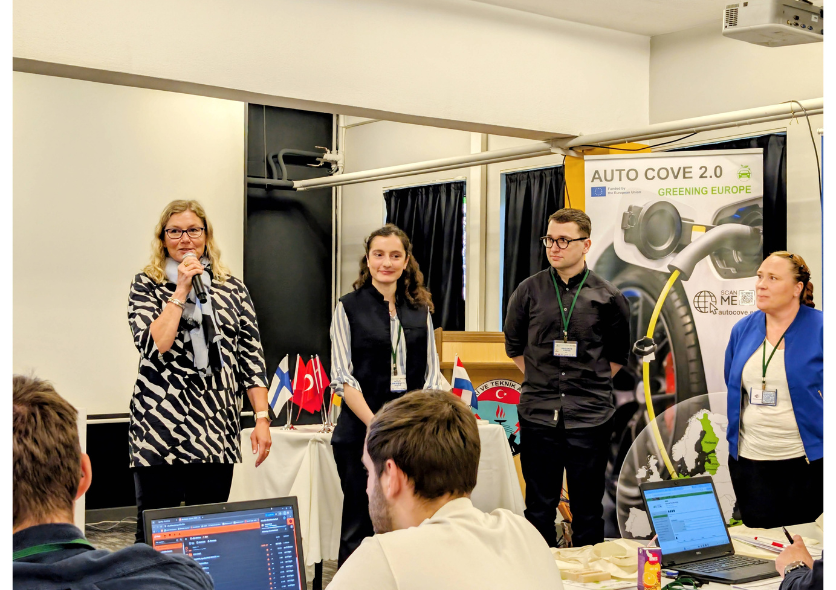
Strengthening Cooperation Between Education and Industry
A key strength of AutoCOVE 2.0 is its close cooperation with industry partners. The workshop featured several presentations from companies and sector experts, providing participants with valuable insights into current technological developments and workforce needs.
Representatives from Volvo and Bilia highlighted the role of vocational education as a foundation for continuous professional development throughout employees’ careers. Industry specialists also addressed critical topics such as battery second-life applications, battery maintenance and recycling, and fire risks associated with electric vehicles. These contributions ensured that the educational materials developed within the project remain closely aligned with real labour market demands and technological developments.
Beyond classroom presentations, participants visited school workshops and took part in a technical visit to Bilişim Vadisi Technology Development Zone, one of Türkiye’s leading innovation ecosystems. The visit provided an opportunity to explore cutting-edge technological developments and strengthen links between education, research, and industry.
Building the Future of Sustainable Mobility Education
The fifth Collaborative Development Workshop demonstrated the significant progress achieved by the AutoCOVE 2.0 partnership in developing innovative educational content for the clean-tech vehicle sector. The event highlighted the value of international cooperation, bringing together expertise from vocational education, higher education, research organisations, and industry to create learning solutions that respond directly to the challenges of Europe’s green transition.
As module development and piloting activities continue across partner countries, the knowledge exchanged during the workshop will contribute to further improving the quality and relevance of project outputs. Through initiatives such as this Collaborative Development Workshop, AutoCOVE 2.0 continues to strengthen vocational excellence and support the development of a skilled workforce ready to lead the future of sustainable mobility in Europe.
Funded by the European Union. Views and opinions expressed are however those of the author(s) only and do not necessarily reflect those of the European Union or the European Education and Culture Executive Agency (EACEA). Neither the European Union nor EACEA can be held responsible for them.
Prepared by:
Auto Cove 2.0
Ventspils tehnikums
📸 Margus Ainsalu