




AUTO COVE 2.0 NEWSLETTER NO.1
Project kick-off and 1st Transnational Meeting in Finland
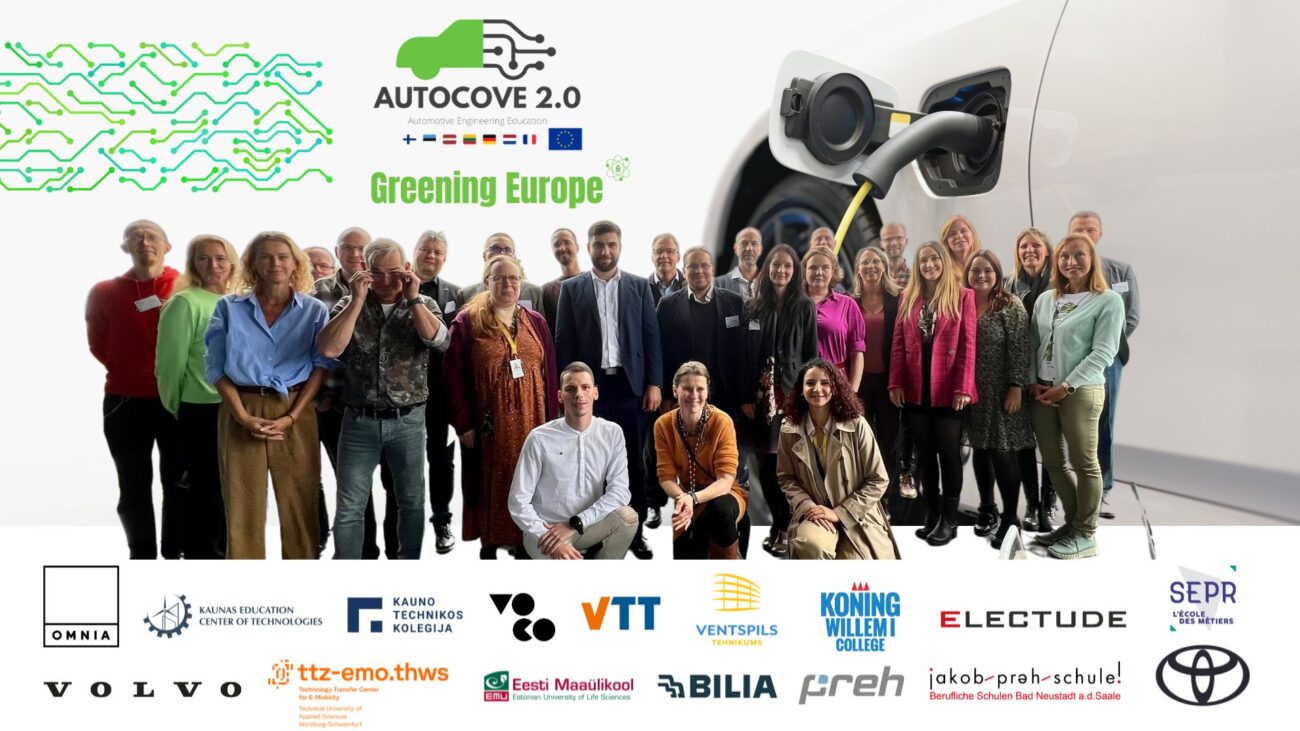
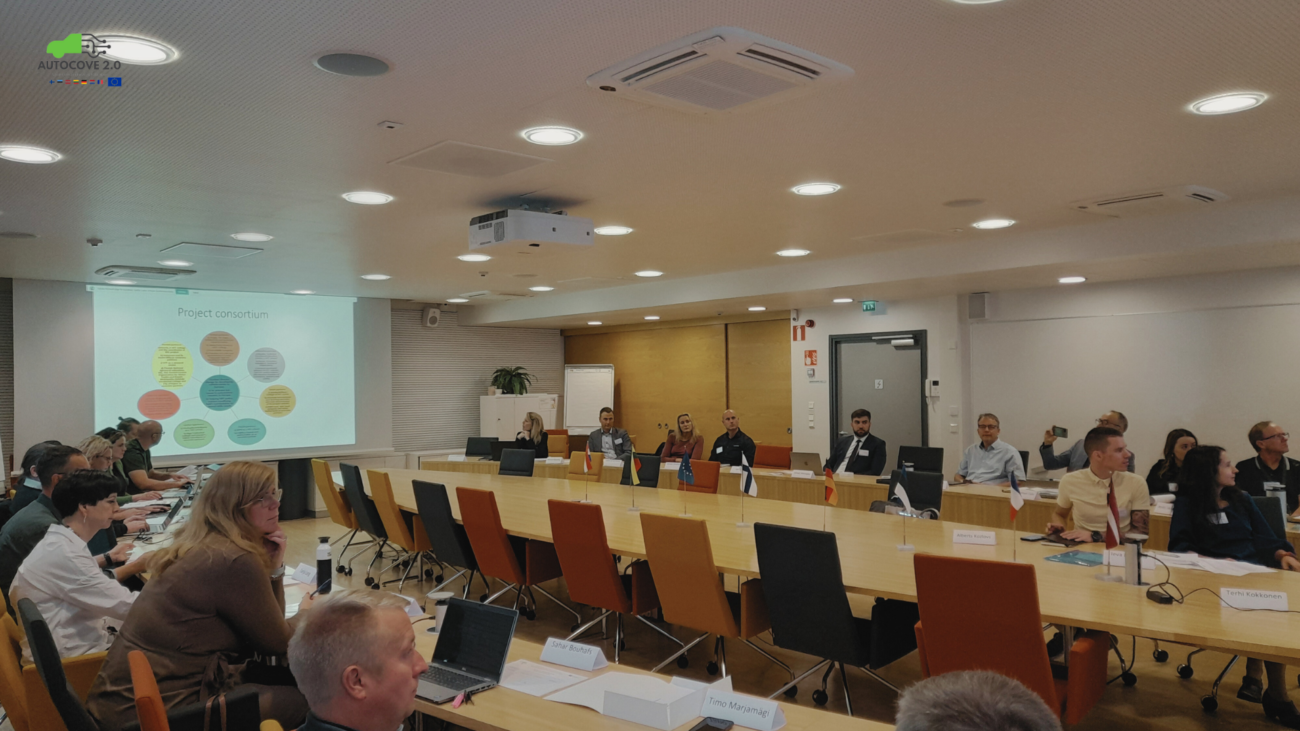
On September 19-20th 2023, the 1st Transnational Meeting was held in Espoo, Finland. Two day meeting gathered all 16 partners from 7 countries – Estonia, Finland, France, Germany, Latvia, Lithuania, and Netherlands.
Aim of the two day face-to-face meeting was to introduce the project team, go through a work-plan and define work principles for the next 4 years.
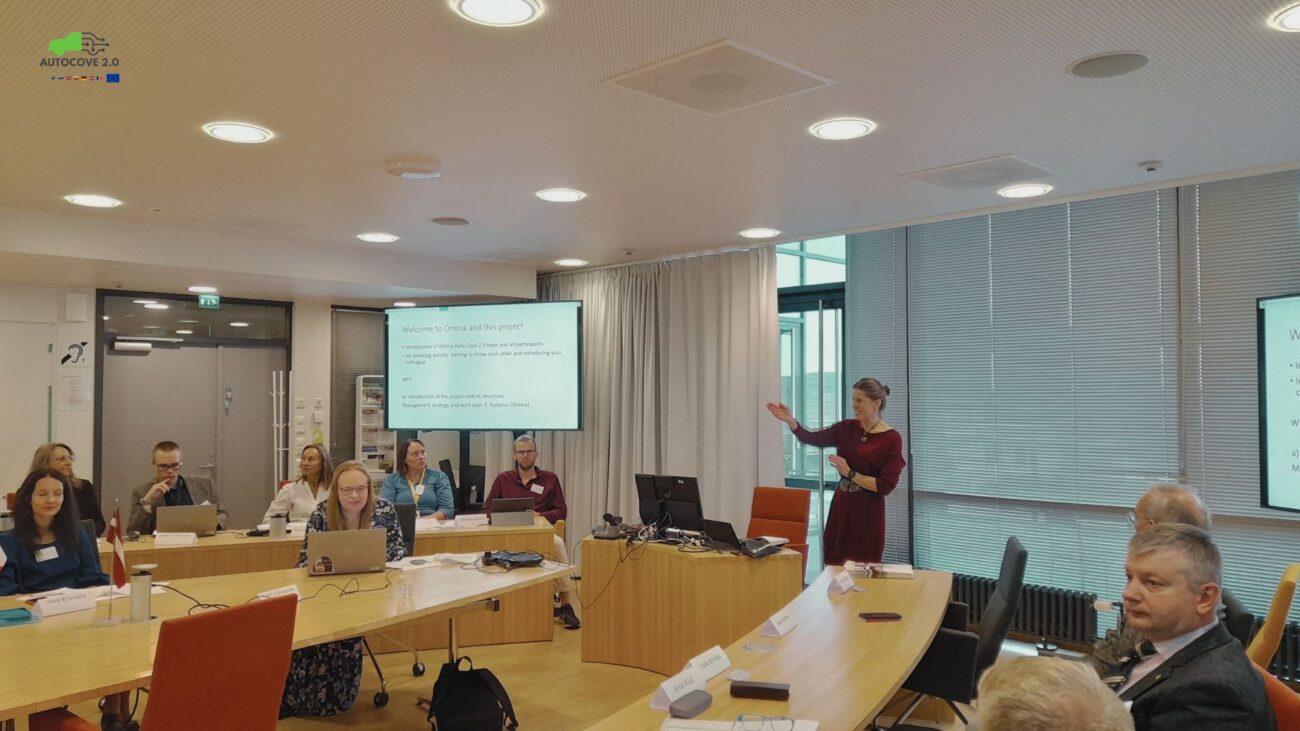
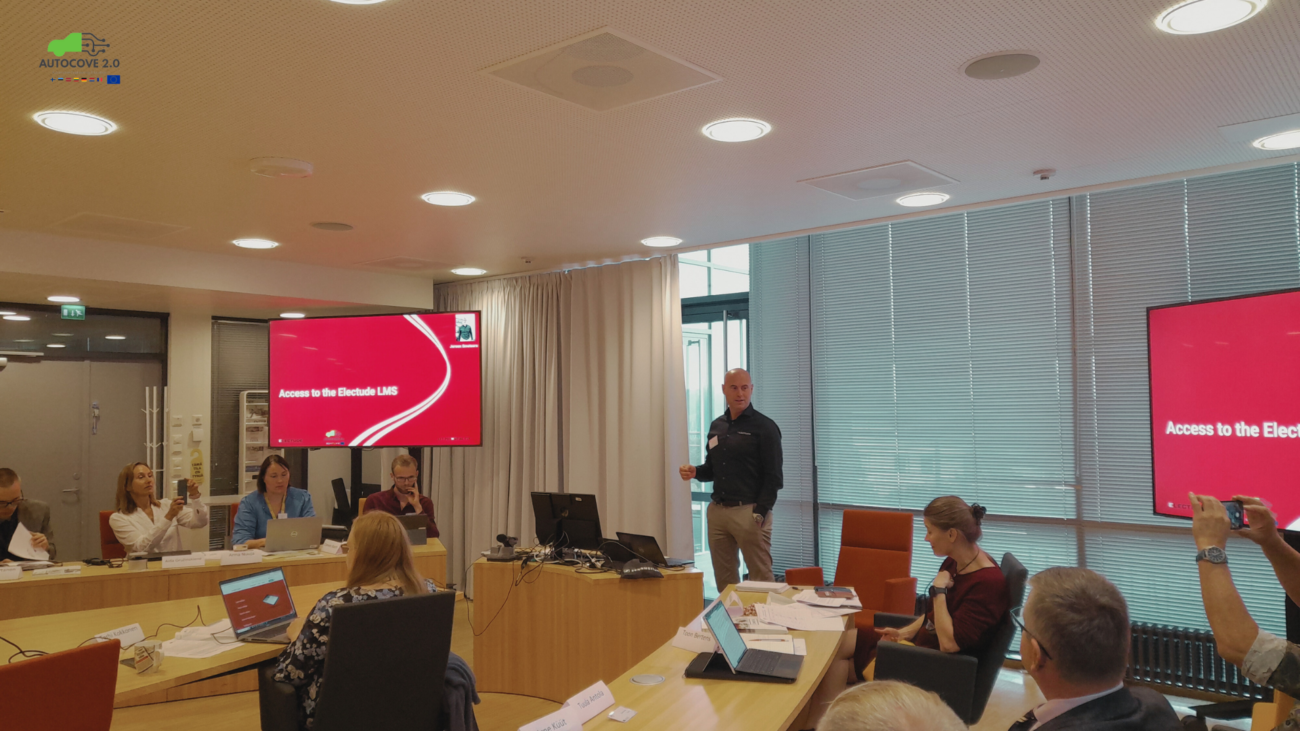
First day kicked-off with a set of ice breaking activities, so that the partners get to know each other better and prepare for the joint work that will last 4 years. After a short but interactive opening from project Lead partner Omnia coordinator Ms. Elina Kollanus, all responsible work-package (WP) leaders presented insight of the work that will be carried out in each of the WP.
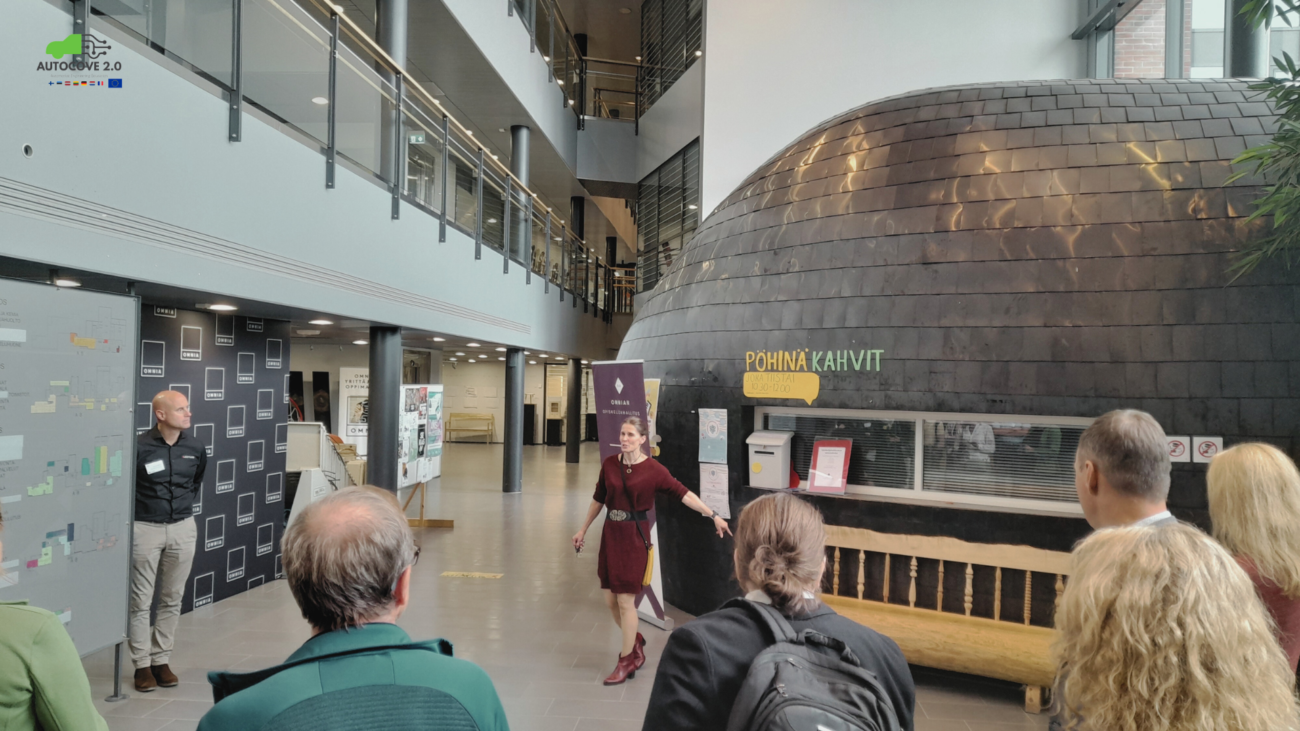
The second day’s agenda’s first part was a continuation of the first day’s aim to introduce partners with each WP content. After half a day of intensive work in office premises, the Transnational Meeting No.1 was later complemented with two site visits – Bilia Olarinluoma vehicle workshop and in the afternoon to Espoo Vehicle museum.
Even both days were filled with presentations that included loads of information about practicalities in the project and upcoming work plan, yet still all of the partners stayed positive and full of energy. Some say that this energy came just right after coffee breaks.. might be the case while being in the country which is the most coffee loving country in the world*.☕
*https://worldpopulationreview.com/country-rankings/coffee-consumption-by-country
Forum of Vocational Excellence in Netherlands
On September 25-26th September 2023, the Forum of Vocational Excellence which is a global partnership platform for the vocational skills sector took place in the Netherlands. Event was attended by 4 project Auto Cove 2.0 partner organizations with the aim to interact, share other Vocational Excellence project experience and also of course to represent the Auto Cove 2.0 project.
On the first day of the Forum on Vocational Excellence, participants were able to dive into the Dutch VET system by going on site visits of the Dutch public private partnerships in VET. In these public private partnerships, VET providers, Universities of Applied Science, regional governments, employers and other stakeholders in the regional skills ecosystem are working on innovation in education, LifeLong Learning, applied research, sharing facilities and creating networks to ensure students and workers have the right skills to do their job.
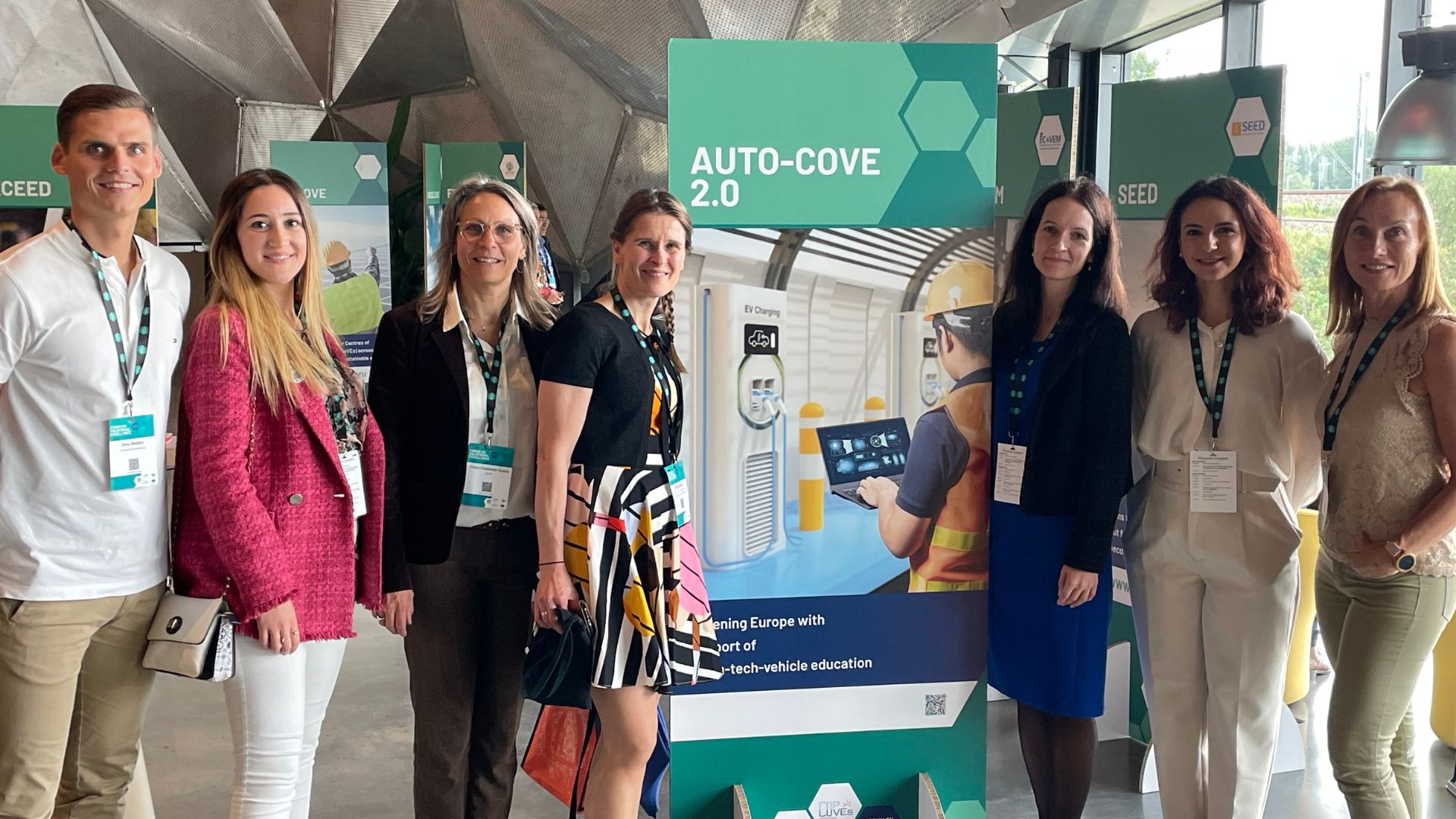
Day two was a day for discussions and workshops where also Auto Cove 2.0 experience was shared to a wider audience. Focus of the discussion was on how we can provide today’s talent with the skills to build a great tomorrow. This goes well along with the Auto Cove 2.0 concept of building the skills of the professionals in the renewable energy transport sector.
Modernization and equipment purchases
In June 2022, Koning Willem 1 College in the Netherlands started the Auto Cove 2.0 project. This is a cooperation project of 7 European countries which has been approved by the European Commission. The EC believes that disseminating knowledge about modern technologies in the vehicle sector contributes to sustainability in traffic. More awareness about these techniques will stimulate their use.
The EC wants to support this project and has awarded €47,800 to Koning Willem 1 College for technical equipment. This amount is intended for the development of teaching materials and learning material related to hydrogen technologies in mobility. Koning Willem 1 College has invested part of this in remote-controlled model cars. These model cars use a fuel cell and a battery and are in line with the students’ perception of the world. We set out a course, and the students compete among themselves to see who can get the furthest with a hydrogen stick. Because the students are interested, they want to make improvements, and it is precisely in this project that we can measure how the energy flow to the electric motor proceeds. Does the power come from the battery, or does the power come from the fuel cell?

To fill the Hydrostick with hydrogen, we have a filling station (Hydrophill PRO).
This station is filled with distilled water (H2O), after which this station decomposes hydrogen (H2) and oxygen (O) by electrolysis. In this way, the station produces hydrogen that is used to refill the hydro sticks so that we can continue experimenting. Filling takes about 2 to 3 hours and the metal alloy in the cylinder absorbs the hydrogen in its crystal structure. The pressure in the cylinder is 30 bar.
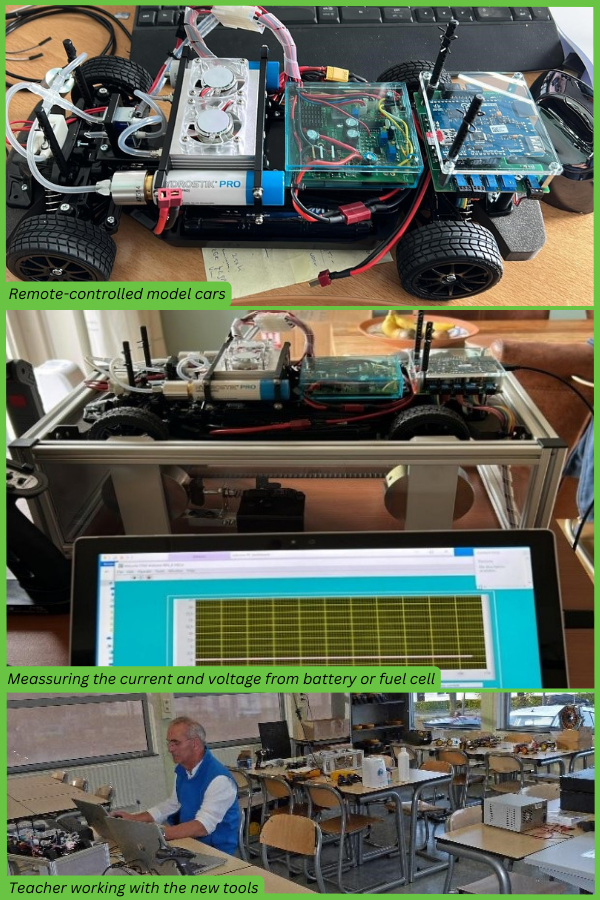
The knowledge about the hydrogen technologies used in mobility will be shared on the Electude International platform and is freely accessible to everyone in Europe, during the next 5 years after the completion of this trajectory. Some research on these hydrogen techniques soon showed that there was a lot of in-depth information about the operation of a fuel cell, but that there was little information about the possible maintenance of these tools/vehicles in mobility.
By displaying a small piece of text at the top right of the screen, a few questions appear in the yellow area. The image on the left can be used to identify parts. Students can work independently through the course material and thus explore their knowledge about the fuel cell. We demonstrated this model during the open day of our school where every future student can come and have a look with their parents. Both parents and students found this very interesting, but our colleagues were also very curious about the measurements. For example, you could see from the measurements that the battery was being recharged by the fuel cell while the model was not driving but was switched on (ignition on).
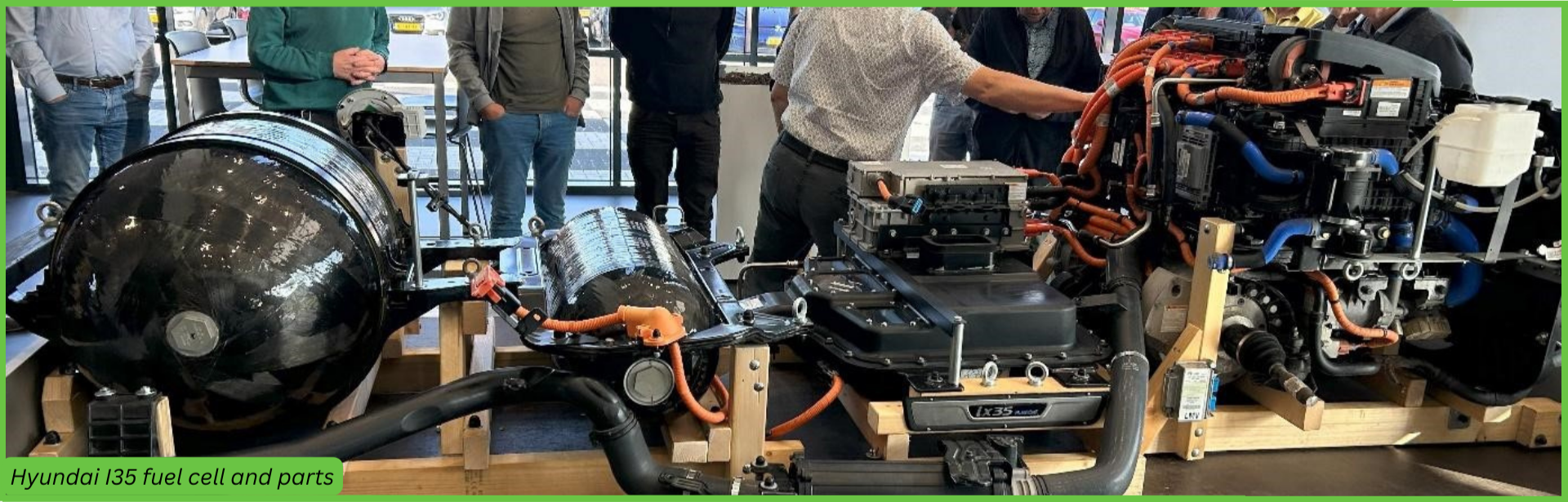
In practice, this means that the batteries can be smaller while the range remains the same. Smaller batteries also mean less weight to move and therefore less energy needed, which in turn benefits the emission standards. This model car has all the basic parts needed for driving on hydrogen with a Fuel Cell. In practice, these components and basic principles also recur. A storage for hydrogen, a pressure regulator, the fuel cell, a voltage/current control, a battery, etc. We will discuss and cover all these topics in the teaching material that is being created and will soon be available to everyone online.
Literature review “Development trends in vehicle fleet, vehicle sales and maintenance services”
Technology of vehicles is changing – skills needs will change too.
When the Auto Cove 2.0 project was planned, it was possible to see the change in technology of vehicles such as development of greener vehicle propulsion, driver assistance systems and connected and automated driving. It was also possible to see the potential for development of skills gaps and risk of skill obsolescence in professions related to vehicle maintenance, repair and sales. While the changes in technology and regulation of vehicles were obvious, it was much less clear what are the development trends most affecting the skills requirements and how the trends will affect the skills required in vehicle maintenance, repair and sales activities.
For this reason, the Auto Cove 2.0 project carried out a study on the development trends in the vehicle sector. The objective of the study was to identify the development trends in the vehicle sector most affecting the skills requirements in vehicle maintenance, repair and sales professions. A literature review was carried out, and recent developments in vehicle fleet and vehicle sales were analysed based on Eurostat data for the countries covered by Auto Cove 2.0. The literature review covered scientific publications, news related to vehicle industry and regulation related to vehicles.
The results of the review indicated that the automotive industry is heading towards electric powertrains and further automation. These are driven by both market-driven deployment and regulation of new vehicles.

Based on the data collected in the study, regulations, car manufacturers’ targets, and general shift towards decreasing emissions, it seems that the industry is mainly moving towards BEVs. Also, the popularity of hybrid vehicles is increasing as an intermediate option between ICE vehicles and BEVs. While hydrogen vehicles are still rare, hydrogen may become a viable option especially for heavy-duty vehicles if adequate fuelling infrastructure is in place.
Vehicle manufacturers are willing to provide advanced automation functions and connectivity for increased convenience, comfort, and safety for customers. Also, EU-wide regulation requires a certain level of automation functions from all new vehicles for safety, and the level is increasing. While ADAS functions are already common in modern vehicles, automated and fully automated vehicles still require research and innovation, and it is hard to predict timelines for automated vehicles. However, regulation is already put in place to support adoption of automated vehicles.
These changes in the automotive sector require people working in the industry to adapt and develop their skills to be able to provide services best they can. Electrification replaces more traditional mechanics with high-voltage components and automation increases the amount of low-voltage electronics and software within vehicles, which affects maintenance services. While customers need information about rapidly developing technology to base their purchase decisions on, vehicle sales personnel need to be well educated about the technology themselves and need to be able to deliver that information for customers. Also, completely new service models may arise as the increase in electronics and especially in software predicts a future where vehicle health monitoring and remote diagnostics become more common. New service models may also arise from a possible shift towards MaaS, which could transform the way people see and use mobility.
Authors: Juha Lilja (VTT), Michael Seefried (THWS), Risto Öörni (VTT)
Survey “Skill gap analysis”
We are happy to inform you that the Skills-gap-survey, Finnish VTT completed, received record-many respondents in 7 partner countries. Auto Cove 2.0 project consortium aimed at receiving replies from 140 vocational teachers and 140 industry representatives, but the targeted amount exceeded 95 replies.
It means that altogether 375 vehicle field persons replied to our survey. 198 of them are vehicle field teachers on secondary or tertiary levels, 31 of them are representing vehicle sales or spare parts’ sales and 146 of them are vehicle maintenance representatives in the car repair workshops in Finland, Estonia, Latvia, Lithuania, Germany, Netherlands and France.

We are impressed by this enthusiasm and are looking forward to receiving the analysis of the survey by mid- January, 2024. This result shows that our comprehension about development needs in the vehicle field is shared.
Skills-gap-analysis aims to gather data from industry representatives and vocational teachers about skills-gaps among vehicle field employees, students and their VET-teachers.
We are impressed by this enthusiasm and are looking forward to receiving the analysis of the survey by mid- January, 2024. This result shows that our comprehension about development needs in the vehicle field is shared.
Skills-gap-analysis aims to gather data from industry representatives and vocational teachers about skills-gaps among vehicle field employees, students and their VET-teachers.
Funded by the European Union. Views and opinions expressed are however those of the author(s) only and do not necessarily reflect those of the European Union or EACEA. Neither the European Union nor the granting authority can be held responsible for them.
Prepared by:
Auto Cove 2.0
Project team