




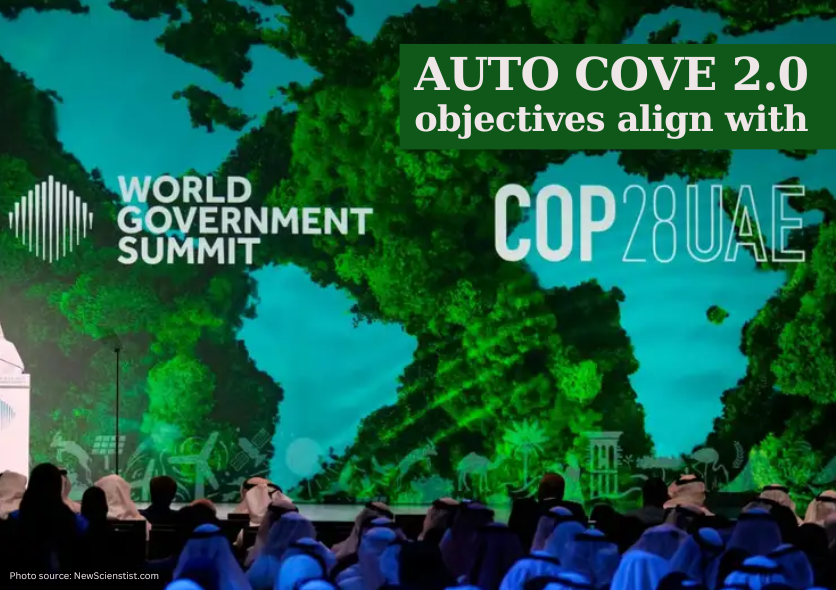
The United Nations Climate Change Conference (COP28), held from November 30 to December 12, 2023, at Expo City in Dubai, United Arab Emirates, reached a significant conclusion, marking a crucial juncture in worldwide endeavors to transition away from the fossil fuel era. This international gathering set the stage for a rapid, fair, and inclusive shift, highlighting the dedication of almost 200 participating Parties towards a future marked by substantial reductions in emissions and increased financial commitments. Leading these initiatives is the European Union (EU), showcasing its leadership in sustainable practices and proactive climate action.
EU’s 2030 Climate & Energy Framework:
The EU’s commitment to a sustainable future is exemplified by its 2030 Climate and Energy Framework, which sets key targets for greenhouse gas emissions reduction, renewable energy adoption, and energy efficiency improvements.
- Greenhouse Gas Emissions Reduction: The EU, recognizing the urgency of addressing climate change, has significantly elevated its ambitions. The 2030 framework aims for a reduction in greenhouse gas emissions ranging from 40% to at least 55% compared to 1990 levels. This target aligns with the global imperative highlighted in the COP28 stocktake, emphasizing the need for substantial emissions cuts by 2030 to limit global warming to 1.5°C.
- Renewable Energy Adoption: Another pivotal aspect of the EU’s 2030 framework is the commitment to increasing the share of renewable energy. The target has been set to elevate the renewable energy share from 32% to 42.5%. The EU is actively investing in renewable energy technologies and infrastructure, aligning with the COP28 call to triple global renewable energy capacity by 2030.
- Energy Efficiency Improvements: The EU recognizes the significance of energy efficiency in achieving climate goals. The 2030 framework includes ambitious targets for both final energy consumption and primary energy consumption. The target for final energy consumption efficiency is set to increase from 32.5% to 36%, while the primary energy consumption target aims for a 39% improvement. These goals underscore the EU’s dedication to optimizing energy use and reducing overall consumption.
As the European Union shifts away from reliance on fossil fuels, its 2030 Climate and Energy Framework and active engagement in global initiatives like COP28 underscore its dedication to sustainable practices. This commitment aligns with the Auto-Cove 2.0 project, where the consortium seeks to independently address climate change by advancing the European Education and Training Area in the Vehicle Sector of Vocational Education and Training (VET) towards eco-friendly innovations.
With ambitious goals for reducing emissions, increasing the adoption of renewable energy, and enhancing energy efficiency, the EU emerges as a guiding force on the global stage, steering toward a future characterized by low-carbon resilience. As COP29 and COP30 draw near, the EU continues to lead, underscoring the imperative of worldwide cooperation and tangible achievements to manifest a 1.5-degree world.
Funded by the European Union. Views and opinions expressed are however those of the author(s) only and do not necessarily reflect those of the European Union or EACEA. Neither the European Union nor the granting authority can be held responsible for them.
Prepared by:
Auto Cove 2.0
Project team