




The TTZ-EMO in Bad Neustadt a. d. Saale is initiating an innovative “Battery Learning Experience Journey” together with Preh GmbH, the Izmit Vocational and Technical Anatolian High School (IMTAL), the Kaunas Education Centre of Technologies and the Kauno Technikos Kolegija. This experiential journey offers participants a comprehensive education in e-mobility – from the production to the recycling of batteries.
As part of this unique experience, students not only learn the theoretical basics, but also gain valuable practical experience. Laptops and monitors have been purchased for these predominantly computer-based activities, which are available to the students as part of their practical training. With this equipment, the students design and build battery modules from individual cells independently, which gives them a deep understanding of the technical structure and functioning of batteries. They also learn how to programme a simple battery management system (BMS) using an Arduino Uno.
Another focus is on the use of 3D printers, which are used for the construction of battery housings. Students will be able to operate these and create 3D print models themselves. As 3D printing is time-consuming, three printers have been purchased that can be used by several students at the same time.
Furthermore, participants are familiarised with key measurement techniques for determining the condition of batteries. These include electroscopic impedance spectroscopy (EIS), incremental capacity analysis (ICV), differential voltage analysis (DVA) and dilatometry. This knowledge is essential for analysing and evaluating aged batteries, which are also considered with a view to possible secondary use.

Practical training in battery module construction can be experienced both in a real and a virtual environment. This option of virtual battery assembly is necessary because not all vocational schools have the technical equipment and expertise to enable their students to build batteries in practice. This allows us to make our learning content available and accessible across countries. The schools only need VR glasses and can conveniently download the content we have developed via Electude.
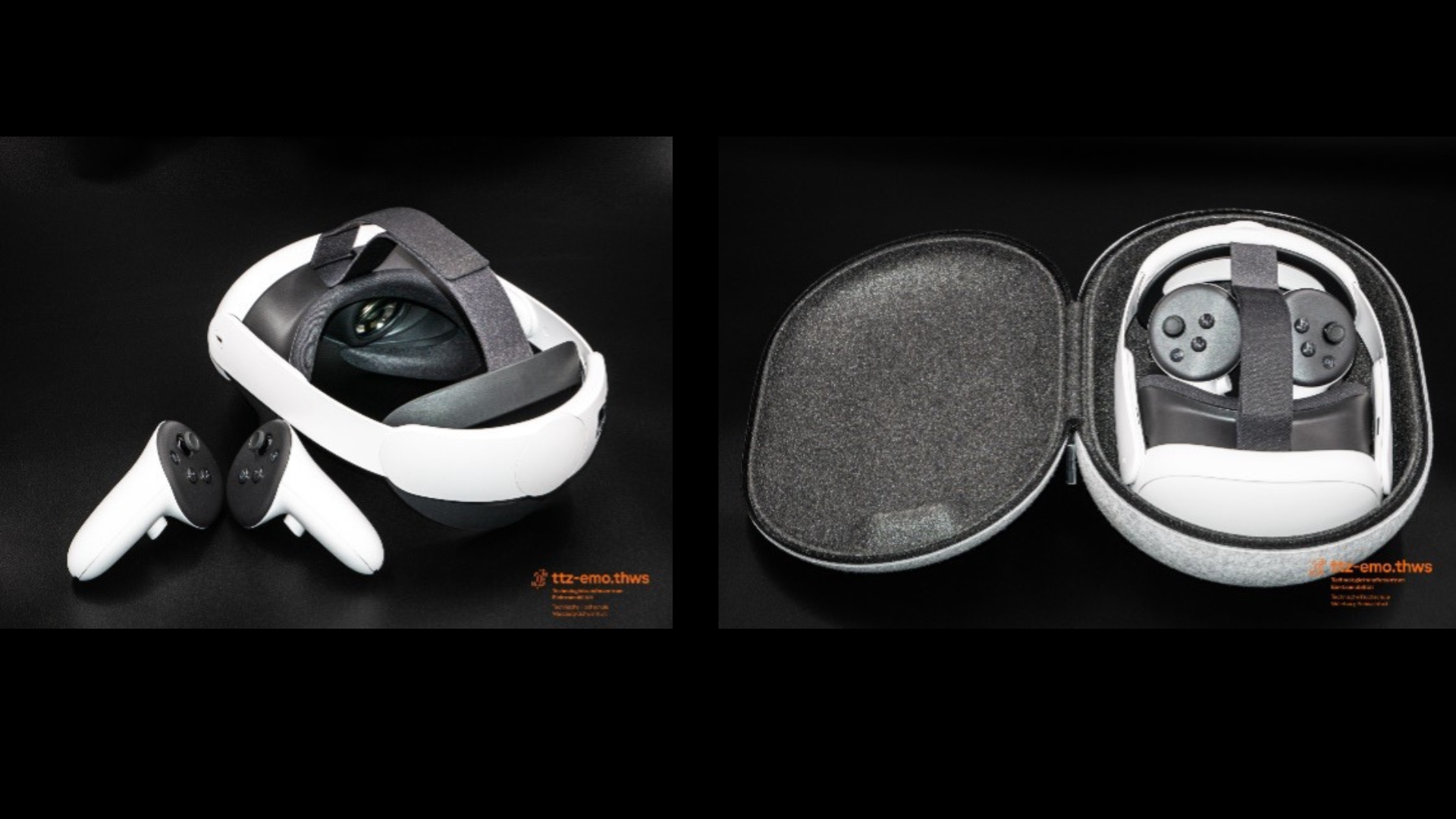 With this innovative solution, we are closing a crucial gap in practical training and helping to implement modern teaching methods even under difficult conditions.
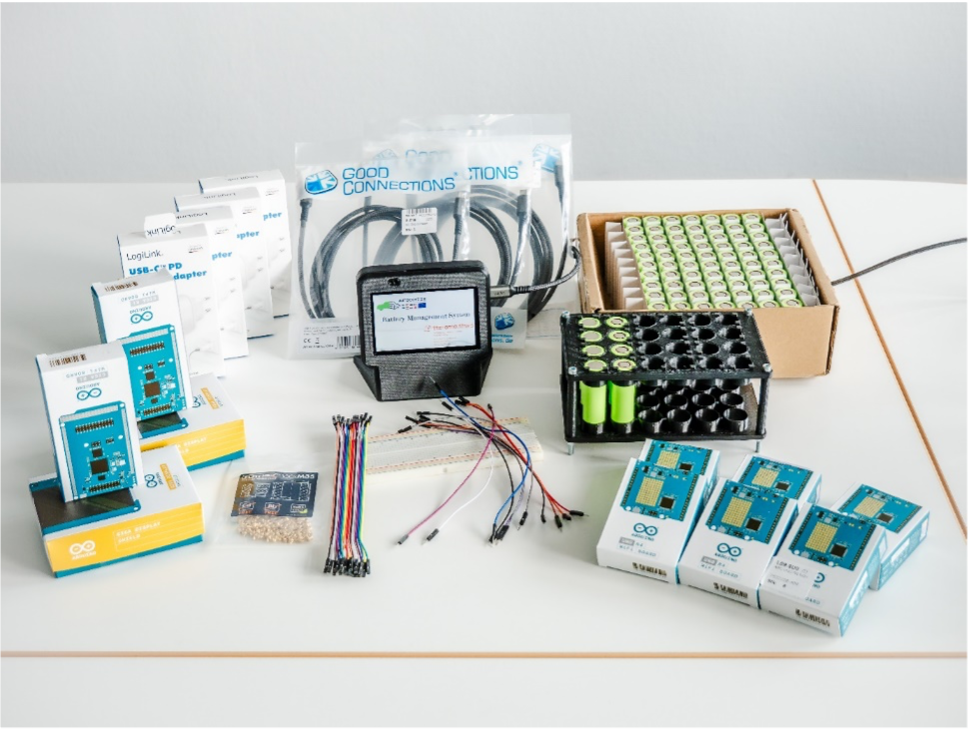
The second part of the practical training is completed using battery dummies for spot welding. These dummies are visually and functionally like real lithium-ion batteries, but do not contain any electrical capacity. They therefore offer a safe and risk-free way of learning how to weld batteries in a practical way. They allow students to practise the joining process in a protected environment without having to worry about potential errors or safety hazards.
As part of the AUTO-COVE 2.0 project, an electric vehicle is a central component of the practical e-mobility training programme. It serves as a demonstration object for drive, system and battery technology as well as for the application of theoretical learning content in the field of charging and battery technology. Students are given the opportunity to experience e-mobility in real-life operation and to analyse the opportunities, challenges and limitations of the current charging infrastructure in Germany.
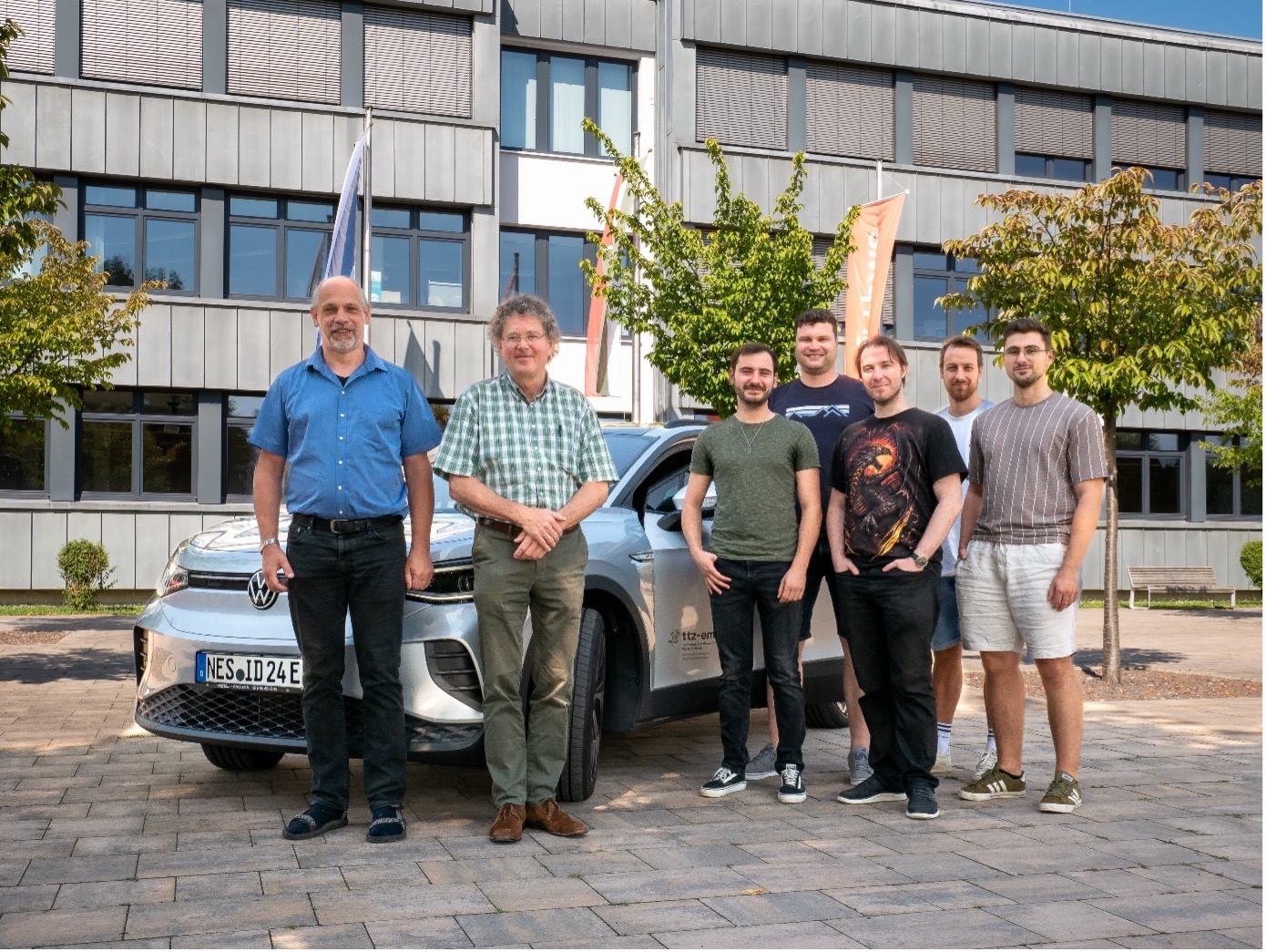 By analysing charging times, grid load and charging power, students can identify potential for improvement, e.g. through the integration of renewable energies or the intelligent control of charging processes in order to minimise the load on the grid. At the same time, investigating the customer experience, such as the user-friendliness of charging points or digital payment systems, offers further research potential. Suggestions for improving charging apps and charging station design could also be developed.
#AutoCoveEUproject #GreeningEurope #VocationalExcellence #CoVE
Funded by the European Union. Views and opinions expressed are however those of the author(s) only and do not necessarily reflect those of the European Union or EACEA. Neither the European Union nor the granting authority can be held responsible for them.
Prepared by:
Auto Cove 2.0
Ventspils tehnikums