




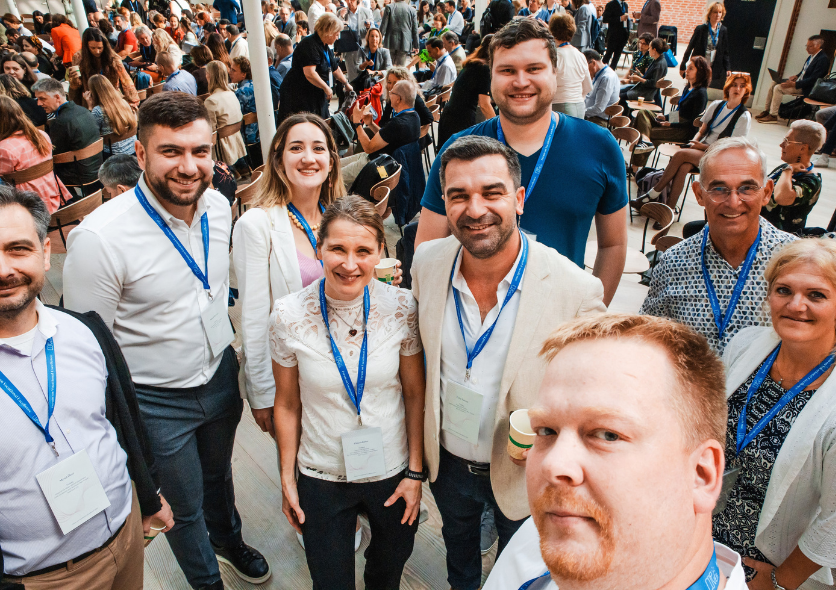
From September 8–10, 2025, the Danish city of Kolding, a UNESCO City of Design, hosted the Centres of Vocational Excellence (CoVE) Forum, bringing together leaders, practitioners, policymakers, and students from across Europe to discuss the future of vocational education and training (VET). The Auto CoVE 2.0 team was no exception, making a strong presence at the event actively contributing to the discussions and activities.
A Cultural Opening
The forum began on September 8 with an official welcome reception at Koldinghus Museum. Participants had the chance to meet project partners, network with other CoVE implementers, and explore the historic museum. Later, attendees continued their conversations informally across Kolding’s restaurants, cafés, and bars.
Opening Day: Setting the Stage
The conference program started on September 9. After registration and coffee, the forum was officially opened with welcoming speeches and introductions from:
-
Merete Due Paarup, Member of the Local Council responsible for sustainable development, welcoming participants to Kolding, a UNESCO City of Design.
-
Mikael Sorknæs, Head of Department for Children & Education, presenting the local skills ecosystem of Campus Kolding.
-
Mads Haugbølle, President of the Danish VET Student’s Association, offering a student perspective on the state of vocational education.
Haugbølle’s input resonated strongly, stressing that to make VET more attractive, Europe must prioritize VET appeal, mobility opportunities, and meaningful action in the green transition.
Panel Debates: Excellence and Competitiveness
Two major panel discussions shaped the morning.

Panel 1 – Excellence in VET
This session explored how to define and achieve excellence in VET, focusing on attracting and retaining both students and workers. Speakers represented the European Commission, CoVE projects, student groups, industry, and social partners. The debate highlighted the importance of career prospects, innovation, and long-term quality development.
Panel 2 – EU Competitiveness and VET
The second panel discussed the link between skills and Europe’s competitiveness in global markets. Themes included recognition of skills, lifelong learning, micro-credentials, cultural heritage, and the role of new tools and technologies. Panelists emphasized that strengthening Europe’s competitiveness requires building on traditional crafts while embracing innovation.
Continue reading article after photo gallery


Workshops and Collaborative Learning
In the afternoon, participants engaged in two rounds of workshops, exchanging experiences on strategies for building and sustaining Centres of Vocational Excellence. The sessions explored innovative technologies, industry-specific skills, and best practices for aligning education with labor market needs.
One of the highlight moments was the workshop “Blueprints for Brilliance: Designing Diverse Centres of Vocational Excellence”, where Elina Kollanus, project coordinator from Omnia (lead partner of Auto CoVE 2.0), took the stage to present the project and share its vision for the future of vocational excellence.

Walking Dinner with a Twist
The evening concluded with a walking dinner across three educational institutions in Kolding — the International Business Academy (IBA), University College South (UCS), and Designskolen (DSK). Each hosted participants with street food, student exhibitions, performances, and presentations. Later, the evening transitioned to a jazz lounge, highlighting Kolding’s vibrant music culture.
Study Visits and Closing Reflections
On September 10, participants joined study trips across Jutland and Fyn, focusing on themes such as offshore energy and climate, urban planning, simulation training, responsible farming, social inclusion, and health innovation.
One site visit highlight was “Vocational Excellence in Offshore, Energy and Climate (Esbjerg)” a study trip that offered participants a hands-on look at Denmark’s cutting-edge green energy sector. Hosted by T-Shore CoVE / Skive College, delegates visited Esbjerg Harbor, exploring leading facilities such as European Energy (Power-to-X innovation) and Vattenfall (offshore wind turbine pre‐assembly lines). The tour provided deep insights into the full energy transition journey—from wind generation to sustainable fuel production—demonstrating how vocational training can align with modern energy challenges and opportunities in one of Europe’s key energy hubs. Among the participants were also Kaido Pobuss (Latvia) & Andreas Ziegler (Germany), representing the Auto CoVE 2.0 project and ensuring that perspectives from our project, VET and HEI sectors were part of the exchange.


The forum concluded with a celebratory session, where participating students received diplomas recognizing their contributions. Mattias Tesfaye, Danish Minister for Education and Children, addressed the audience, followed by acknowledgements of sponsors and a preview of future forums.
Looking Ahead
The closing session announced that the 2026 CoVE Forum will take place in Graz, Austria, followed by Greece in 2027. The Kolding Forum made clear that vocational excellence is not only about technical skills, but also about innovation, inclusion, and community-building. By putting students’ voices at the center and tackling Europe’s competitiveness challenges, the CoVE initiative continues to pave the way for a stronger and more adaptable workforce.
Funded by the European Union. Views and opinions expressed are however those of the author(s) only and do not necessarily reflect those of the European Union or the European Education and Culture Executive Agency (EACEA). Neither the European Union nor EACEA can be held responsible for them.
Prepared by:
Auto Cove 2.0
Ventspils tehnikums