




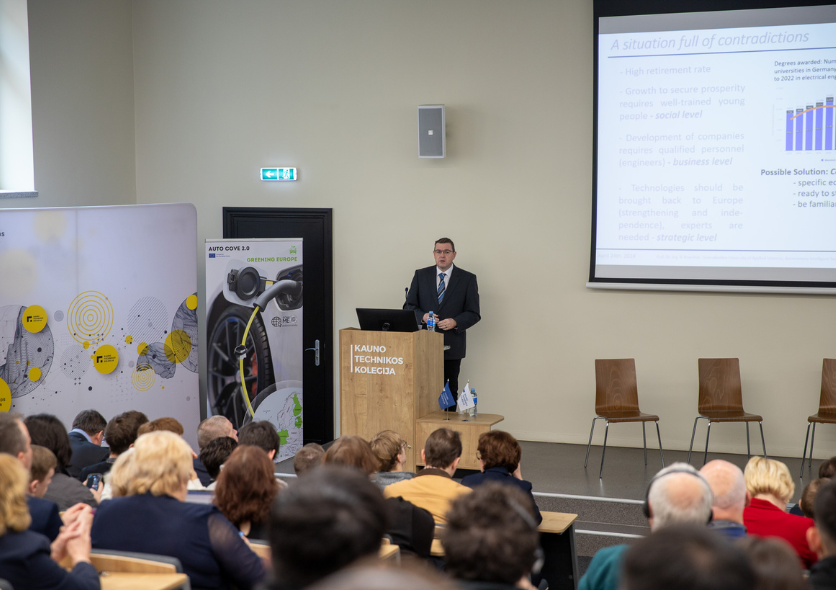
On April 24, 2024, the Kaunas University of Applied Engineering Sciences hosted the landmark conference “Engineering and Educational Technologies 2024: Creating an Inclusive Learning Environment by Training Engineering Specialists.” This event was a centerpiece of the broader international week “Engineering and Educational Technologies 2024,” which attracted approximately 100 participants from various European countries, including Latvia, Poland, Spain, Portugal, North Macedonia, Slovenia, Germany, Malta, Turkey, and Italy. These attendees gathered in Lithuania to exchange ideas and share best practices in the preparation and training of engineering specialists.
The conference served as a vital platform for fostering international collaboration and networking among educators, researchers, and industry professionals. It provided an opportunity for participants to discuss contemporary challenges and innovations in engineering education, emphasizing the creation of inclusive learning environments. The diverse representation from multiple countries underscored the global importance of the event and highlighted the shared commitment to advancing engineering education.
One of the key highlights of the conference was the introduction of the Auto Cove 2.0 project. It was a indicative overview of the ongoing efforts to integrate cutting-edge technologies and methodologies into engineering education. The project’s introduction sparked considerable interest and laid the groundwork for subsequent discussions on its potential impact.

Two noteworthy presentations at the conference focused on critical aspects of electric vehicle technology, particularly relevant in the context of current environmental and safety concerns.
Marius Mažeika delivered an engaging presentation titled “Research of Electric Car Battery Reliability in Cold Climate Zone.” This presentation highlighted the initial findings of research aimed at understanding how electric car batteries perform in colder climates. The reliability of these batteries under such conditions is a crucial factor for the adoption of electric vehicles in regions with harsh winters. Mažeika’s presentation drew significant attention and prompted discussions about the practical implications of these findings, as well as potential areas for further research.
Darius Juodvalkis presented on “Research of Electric Car Fire Prevention Safety,” focusing on the unique fire safety challenges posed by electric vehicles. This presentation detailed the specific fire safety procedures necessary to manage and mitigate risks associated with electric cars. Given the increasing prevalence of electric vehicles, understanding these safety protocols is essential for both manufacturers and emergency responders. Juodvalkis’ insights into the peculiarities of fire prevention in electric vehicles provoked a robust discussion among participants, underscoring the importance of safety in the ongoing development and deployment of electric vehicles.
The presentations by Mažeika and Juodvalkis not only provided valuable information but also engaged conference participants in active discussions. These sessions were characterized by a high level of interaction, with attendees posing numerous questions and proposing new ideas for further research. The enthusiasm and curiosity displayed by the participants underscored the dynamic nature of the field and the continuous quest for knowledge and improvement.
The “Engineering and Educational Technologies 2024” conference at Kaunas University of Applied Engineering Sciences was a resounding success, marked by rich exchanges of ideas and pioneering research presentations. The event reinforced the importance of international collaboration in advancing engineering education and highlighted critical areas of research in electric vehicle technology. As the global community continues to strive for innovative and inclusive educational practices, conferences like this play a pivotal role in shaping the future of engineering education and practice.

Funded by the European Union. Views and opinions expressed are however those of the author(s) only and do not necessarily reflect those of the European Union or EACEA. Neither the European Union nor the granting authority can be held responsible for them.
Prepared by:
Auto Cove 2.0
Omnia