




AUTO COVE 2.0 NEWSLETTER NO.2
Technology & Equipment modernization
Over the past six months, seven out of sixteen Auto-Cove 2.0 project partners from education sector (VET’s and HEI’s) have acquired new technologies and equipment to enhance their educational offerings in a more sustainable and modern direction. This includes EdTech tools like 3D printers and training systems for hybrid and electric vehicles, as well as electric and hybrid electric vehicles incorporating H2 technology components.
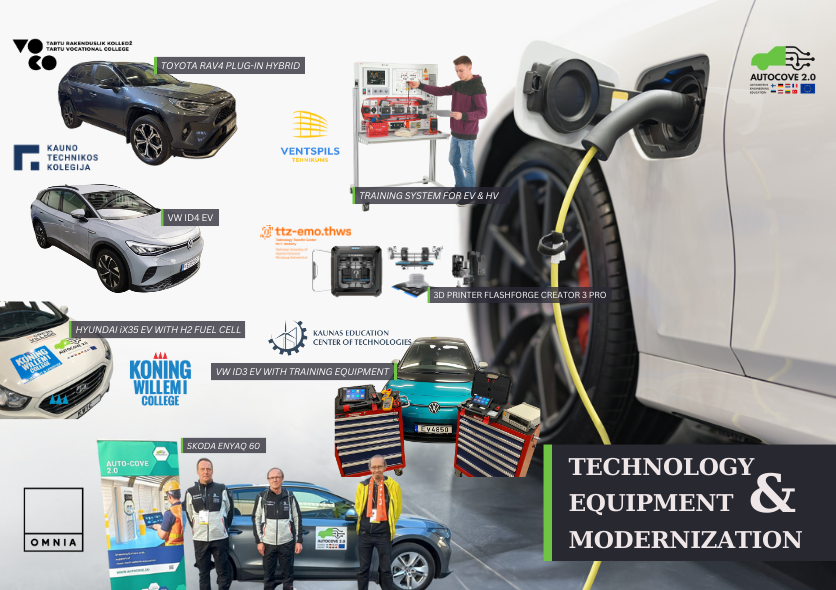
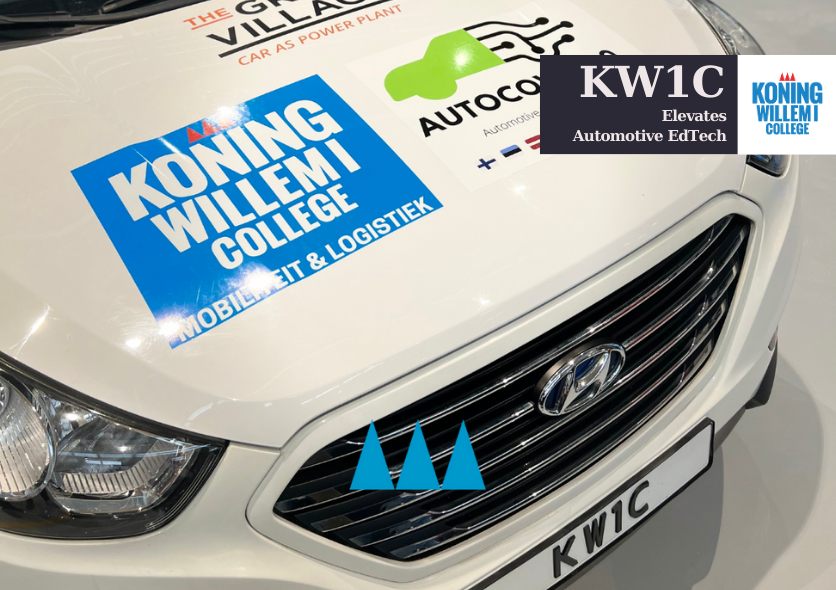

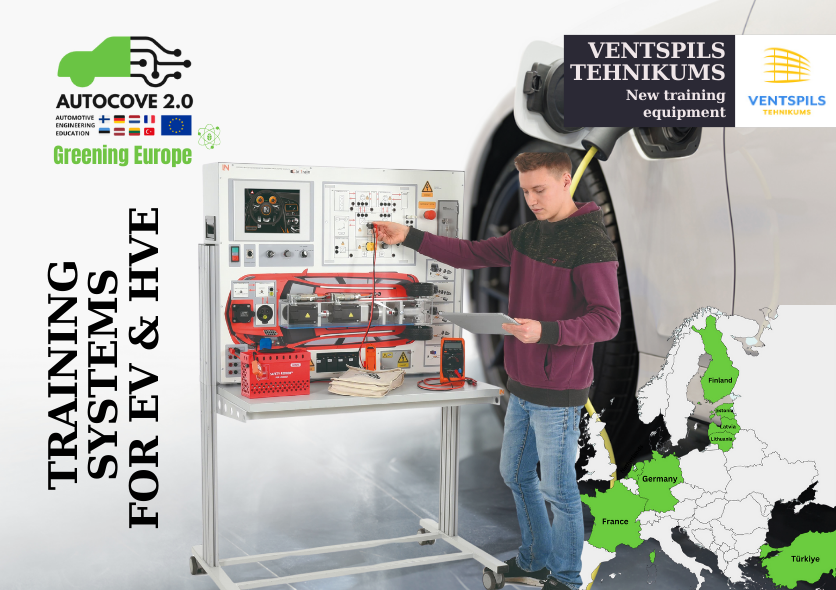
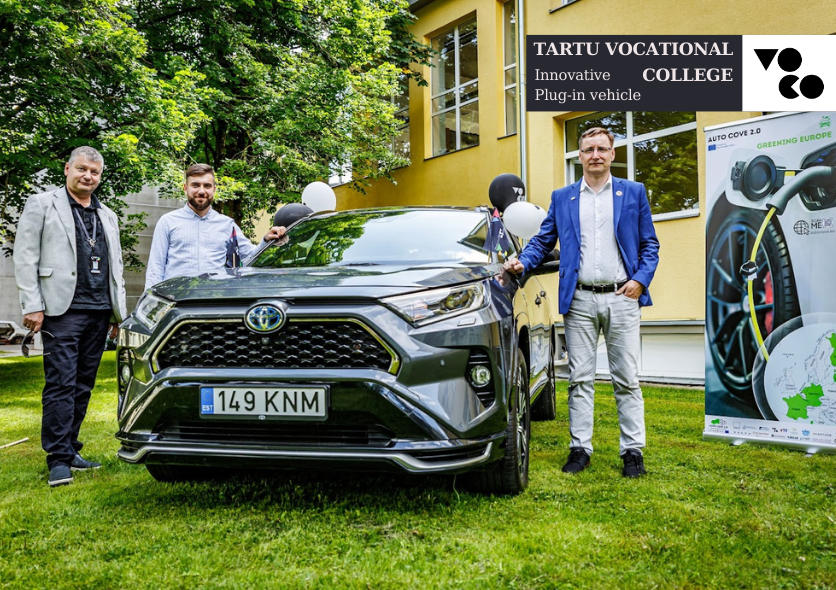
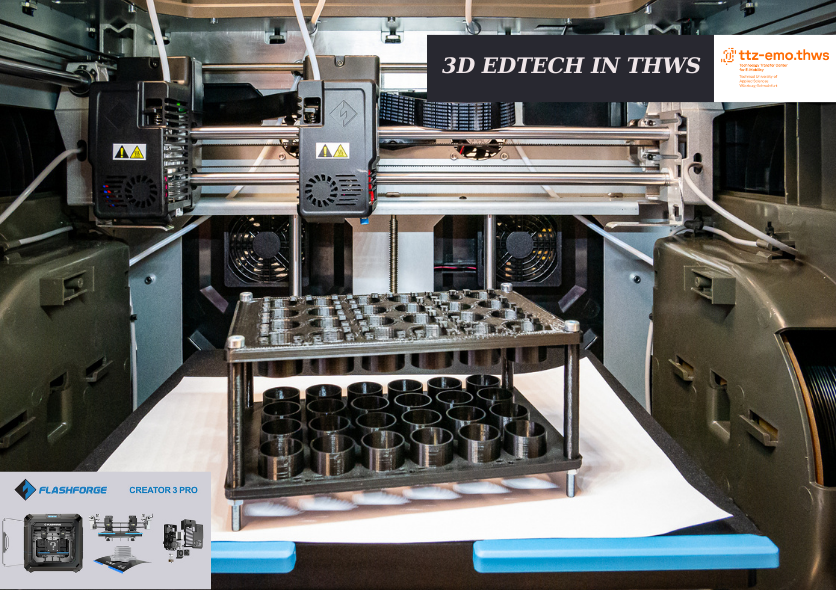
- Tartu Vocational College unveils plug-in hybrid car TOYOTA RAV4
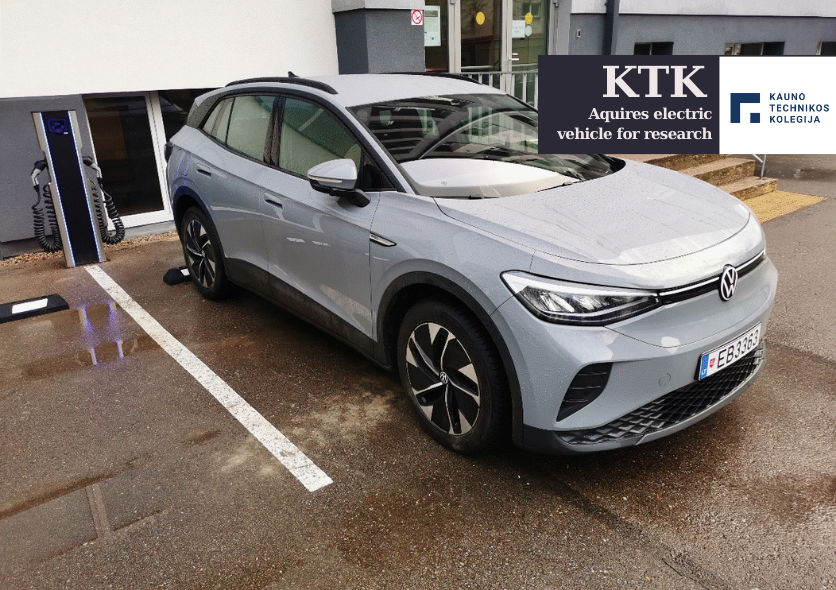
- Kaunas University of Applied Engineering Sciences aquires electric vehicle VW ID4 for research
- Koning Willem I College elevates Automotive EdTech with Hyundai iX35 – electric vehicle with H2 fuel cell
- OMNIA takes leap toward sustainable mobility with electric vehicle Skoda Enyaq 60
- Ventspils tehnikums introduces Training System for Electric vehicle & Hydrogen vehicle
- Technical University of Applied Sciences Würzburg-Schweinfurt advances with 3D EdTech tool Flashforge Creator 3 Pro
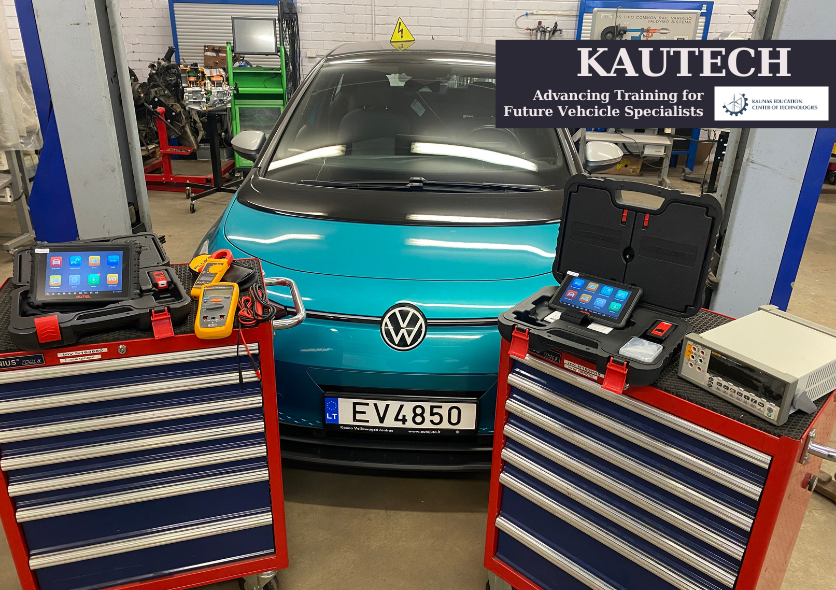
- Kaunas Education Centre of Technologies aquires electric vehicle VW ID3 for training
Research
The automotive sector is a key driver of the European economy and technological progress, but it faces a significant challenge: the skills gap. This gap, the discrepancy between the existing skills of the labor force and the industry’s requirements, hinders efficiency, innovation, and competitiveness. Rapid technological advancements such as electrification, autonomous driving, and connected mobility, along with changing customer expectations and new regulations, put pressure on educational institutions, companies, and workers to continuously develop new skills. This work focuses on enhancing competencies within vocational training in the automotive industry to meet these growing demands and changes.
This research quantified current and future skills needs in the automotive industry for seven European countries, identifying existing skills gaps. These findings are vital for ensuring workers keep pace with industry innovations and for enabling proactive measures to bridge future skills gaps. This contributes to job security for employees and enhances the performance, innovation, and competitiveness of automotive companies. The research builds on previous studies on employment effects in the industry. Key results are summarized, initial research questions are answered, and future research directions are outlined.
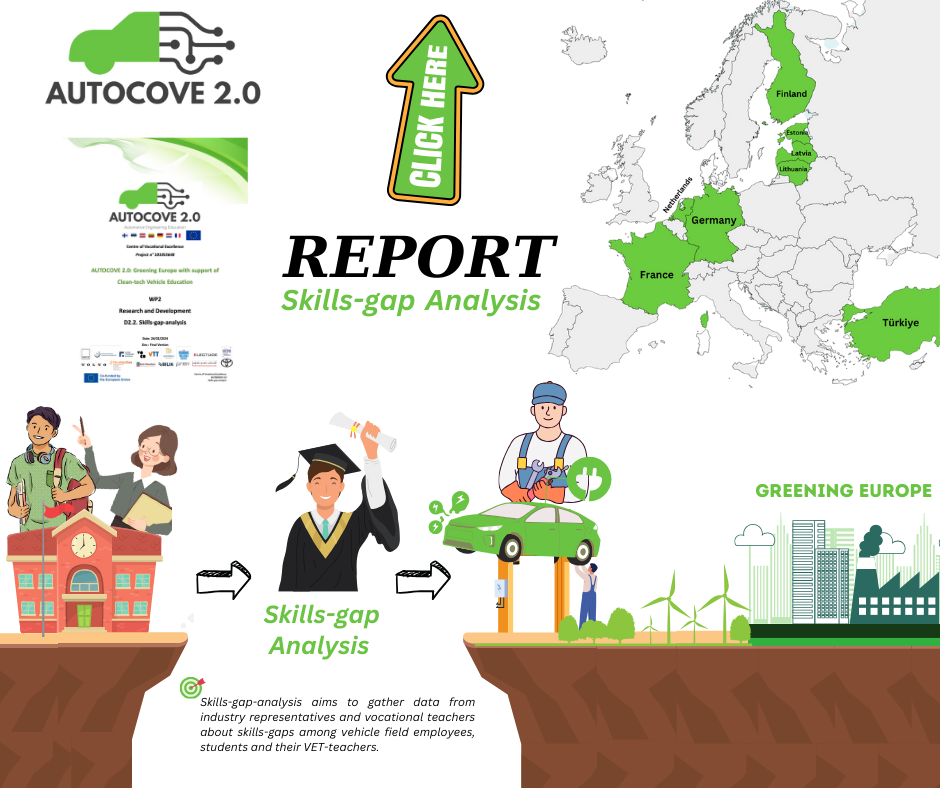
Development of skills and knowledge. Exchange of experience.
First Collaborative Development Workshop in Finland
The first collaborative development workshop of the Auto-Cove 2.0 project, funded by the European Commission, was held at the end of April at Omnia. Thirty technical development teachers in automotive education and six industry representatives gathered for three days to discuss various topics: “Calibration of driver-assistance front cameras and radar”, “Production of hydrogen from distilled water and its conversion into vehicle fuel”, “Basics of lithium-ion batteries”, “Hybrid EV basics and safety”, “Safety aspects of high-voltage batteries”, “Repair and recycling of electric vehicle batteries”, “Session for vehicle salespersons on traffic emissions, WLTP measurement method, and sales of alternative fuel vehicles”.
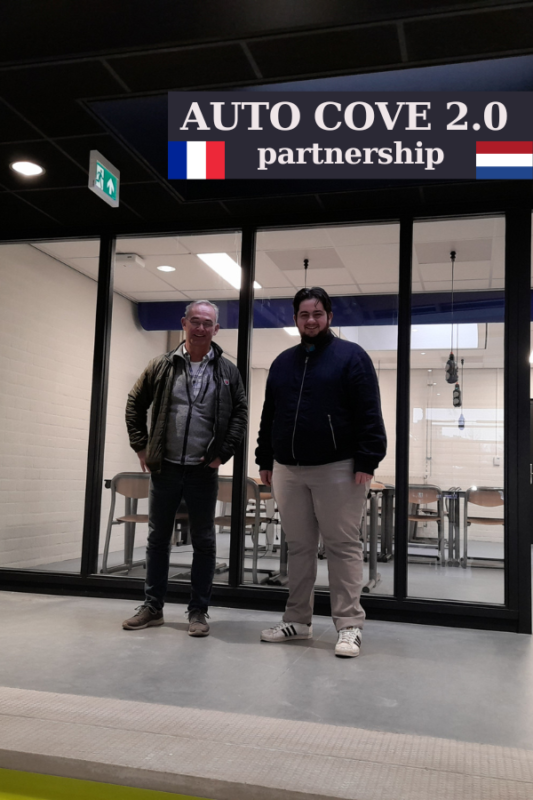
VET’s exchange with experience
VET from France SEPR visited Koning Willem I College in Netherlands. The visit aimed to strengthen the relationship between institutions, explore the school’s facilities, automotive departments, exchange knowledge and best practices. Head of Technical and IT Professions at SEPR, Mobility Expert and Pedagogical Coordinator at SEPR, were hosted by KW1C project managers and automotive teacher. French colleagues described the visit as “rich, constructive, and inspiring,” noting valuable insights from the mobility department and workshops.
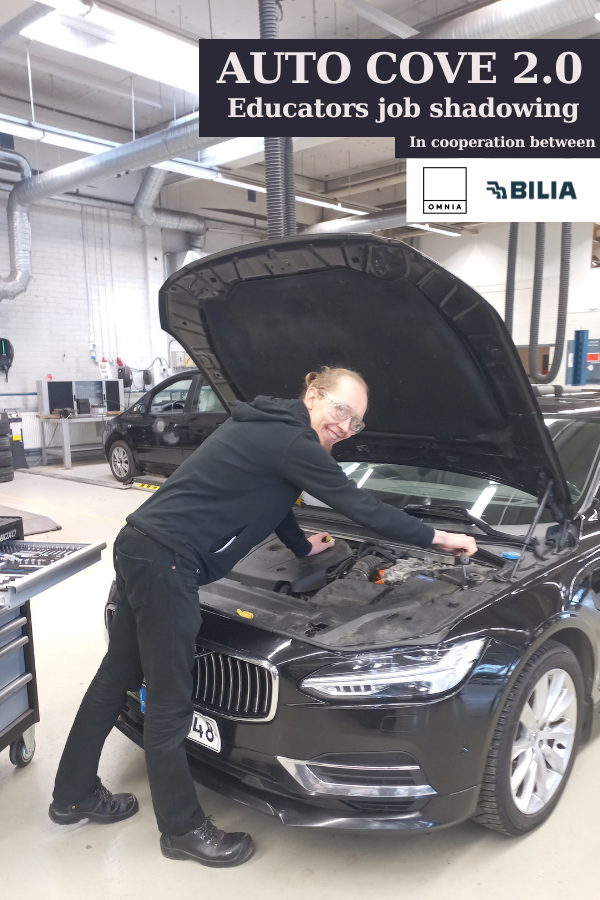
Automotive Teachers Explore Electrified Vehicle Services
Automotive Engineering teachers Jan Borg and Juha Hämäläinen participated in a job shadowing activity at Bilia Oy, a project partner. The beneficial experience may be repeated later this year. The teachers will use their new knowledge for project development and student tasks at Omnia.
Jan Borg worked with diagnostics mechanics on complex car issues. He observed a warranty repair on an electric car that couldn’t fast charge, identifying a fault in the high-voltage battery’s contactor unit, which required battery removal.
Advancing Digital Pathways in Mathematics & Physics
The Institute of Forestry and Engineering at the Estonian University of Life Sciences, in collaboration with OMNIA (Finland), announces its contribution to the Auto-Cove 2.0 project by developing digital study modules in Mathematics and Physics. These modules aim to support vocational college (VET) students aspiring to higher education. VET students in technical fields often face challenges due to gaps in their mathematics and physics knowledge, which can hinder their university studies. These innovative modules provide self-learning materials, examples, and self-assessment tests to help bridge these gaps and enhance proficiency. The Estonian University of Life Sciences and its partners are dedicated to empowering vocational students to confidently pursue their academic goals.

Advancing Collaboration: Transnational Meeting in Tartu
In the vibrant city of Tartu, Estonia, the Transnational meeting convened on March 26th and 27th at the Tartu Vocational College (VOCO). This gathering marked another milestone for the consortium as it embarked on a journey of collaboration and strategic planning to advance to the next objectives of the project.
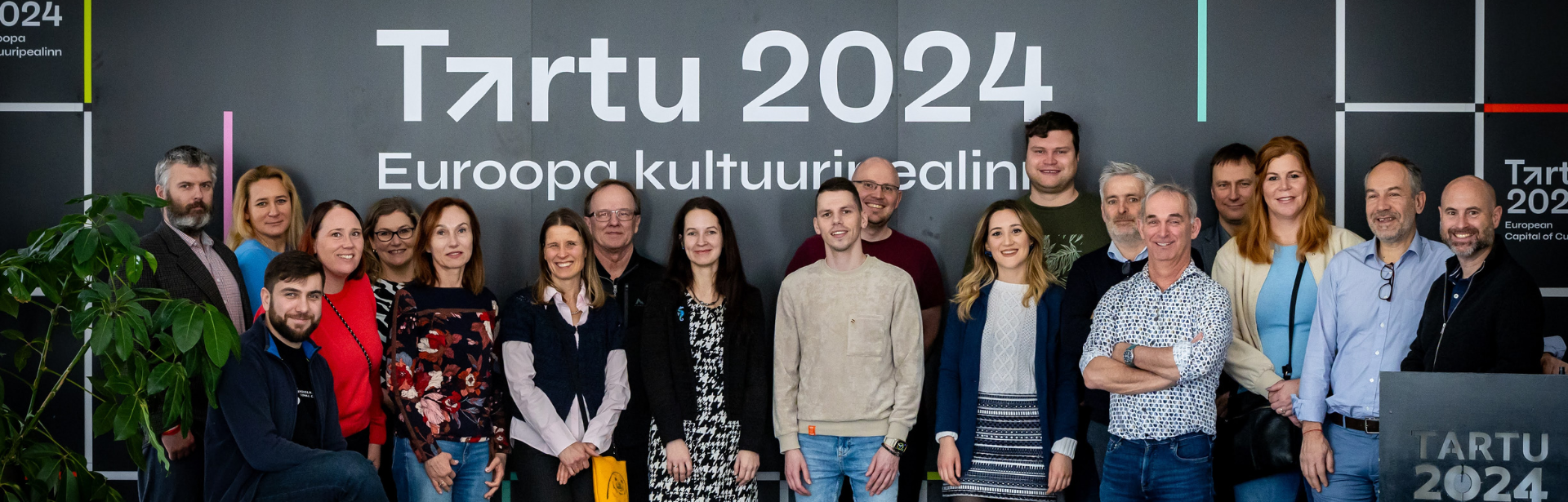
Enriching partnership
Izmit Vocational and Technical Anatolian High School
Auto-Cove 2.0’s new partner, Izmit Vocational and Technical High School, has joined Auto Cove 2.0 consortium to contribute to our project from the heart of the automotive industry.
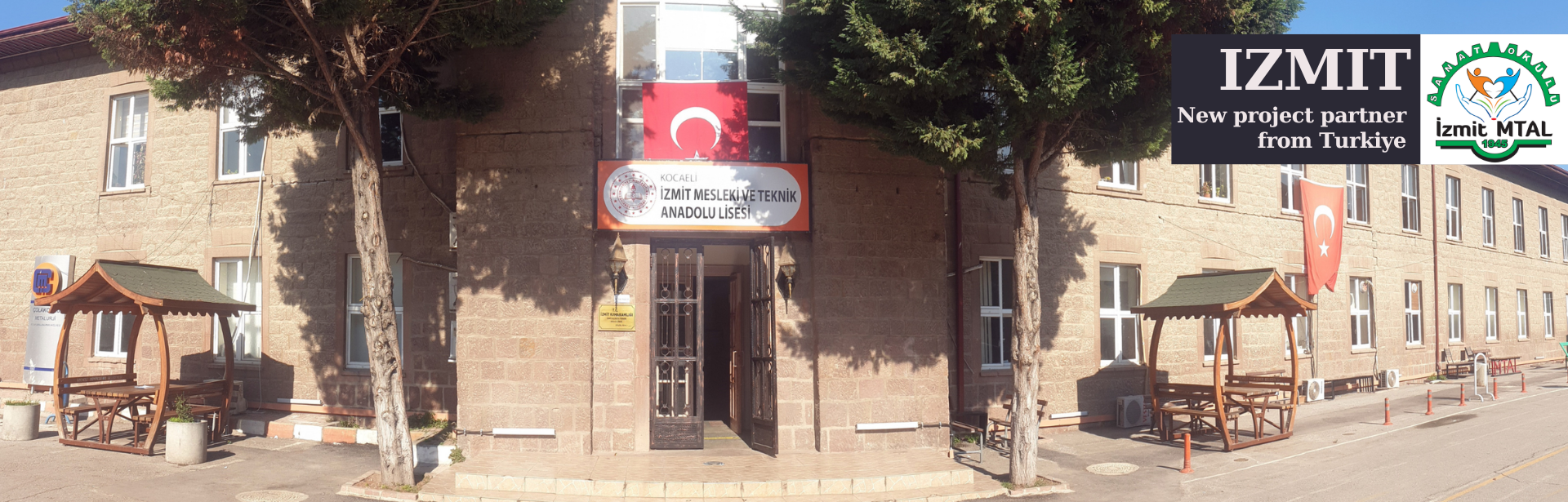
Izmit Vocational and Technical Anatolian High School, established in 1945, is a well-established educational institution. Located in Kocaeli, Turkey’s most industrialized city, The school plays a pioneering role in vocational and technical education. I has produced many successful graduates who possess the qualifications needed by the business world.
The school maintains a close collaboration with the Kocaeli Chamber of Industry, one of Turkey’s largest industrial chambers, which includes 3,500 large-scale industrial enterprises, among them giants of automotive production. In 2018, the school administration was transferred to the Kocaeli Chamber of Industry through a formal protocol. This transition has significantly enhanced the school’s ability to meet the needs and requirements of the business world.
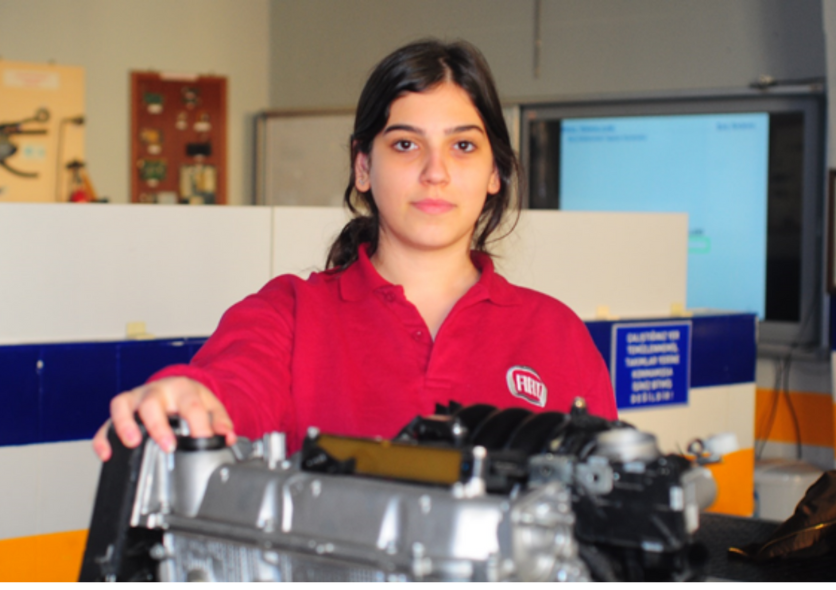
The school offers education in various fields, including Information Technology, Furniture and Interior Design, Chemistry, Motor Vehicles, Electrical-Electronics, Industrial Automation, Machinery, and Metal (Welding) Technologies, covering a total of 52 specialties within these areas. Currently, our school has 200 teachers and 2,000 regular students. They implement three different types of education: Regular Education, Open High School, and Adult Education. Approximately 90% of its students are in the 14-18 age group enrolled in regular education programs.
Funded by the European Union. Views and opinions expressed are however those of the author(s) only and do not necessarily reflect those of the European Union or EACEA. Neither the European Union nor the granting authority can be held responsible for them.
Prepared by:
Auto Cove 2.0
Project team